
Good morning,
Does time seem confusing to you these days? Is Vancouver only two hours’ difference from New York City? Is Edmonton the same time as Austin?
Oddities of moving to permanent daylight saving time aside, I’ve also been thinking about the financial concept of quarters and how they don’t really make sense to me. Thirds seem more appropriate; somehow everything after the start of September just blurs together.
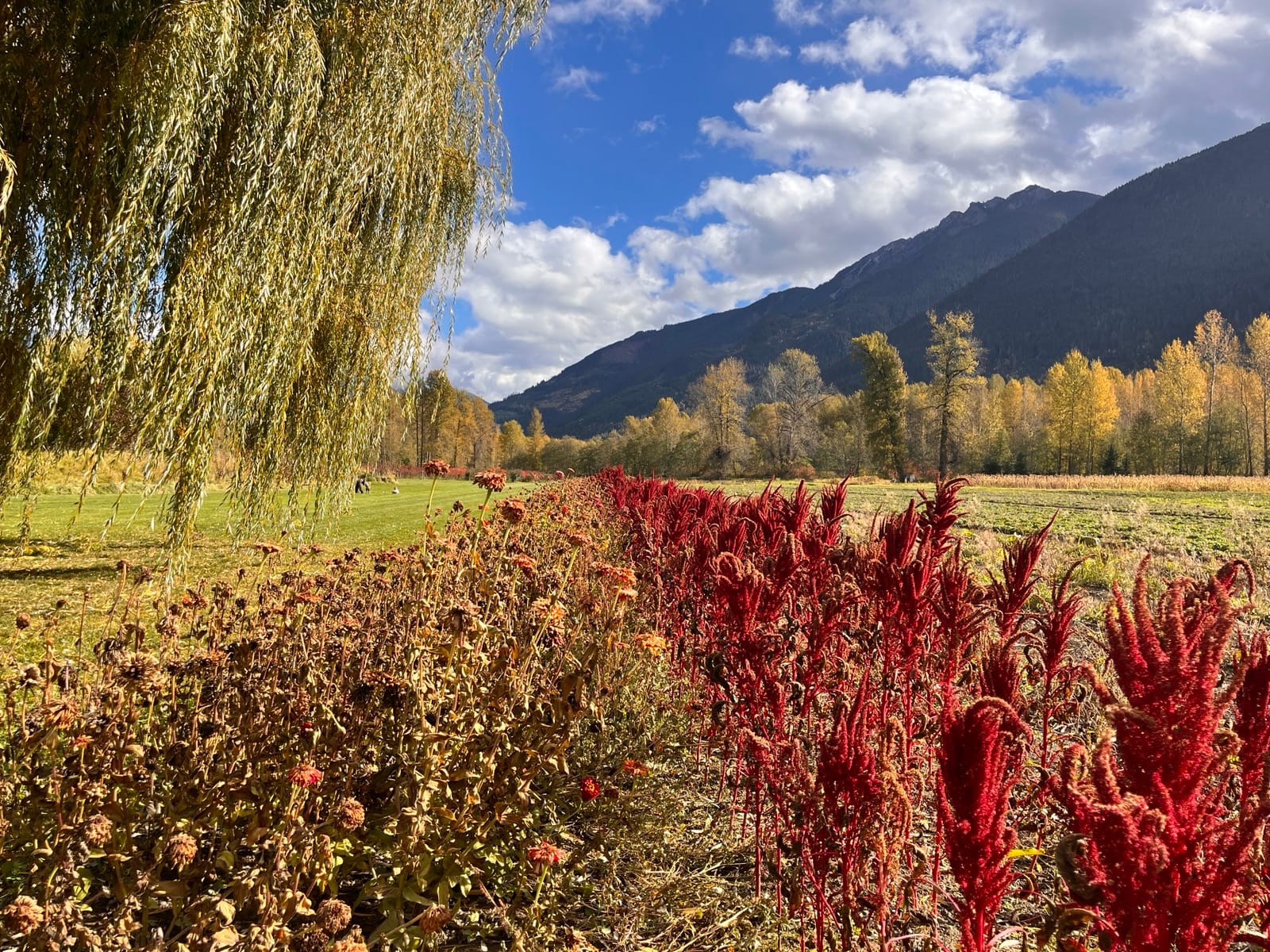
I don’t feel blurry so much as fluid right now. I’m moving between many things, some difficult, some joyful, but with this sense that they’re all part of this particular season I find myself in, both personally and professionally.
Two “blue waves,” one in the United States, one in British Columbia, each with vastly different outcomes. A national electricity strategy with bold aims to electrify the Canadian economy that also embraces methane in a way many in my circles find unexpected. A Hormuz-driven global inflationary shockwave that I don’t think many are fully tracking yet, one that will hurt the poor even as it weans us further off fossil fuels.
It’s all fluid. How are you feeling?
Something worth your time
Oil price shocks because of the Hormuz crisis will raise the cost of everything in 2027, we just don't know by how much yet – I've been reading the World Economic Outlook from the IMF and some central banking publications to get a sense of how this year's energy crisis will impact inflation in 2027.
To paraphrase the IMF: don't get misled by big-picture numbers like the average growth in the economy, or sky-high stock prices. The energy crisis and trade instability have ground down the capacity of the system from governments all the way down to small businesses. And the level of resilience that remains depends on both how rich you already were and how dependent on fossil fuel imports you are.
A flashing light, to be sure, but the IMF's expectation that global economic growth would rebound in 2027 means this is only an energy crisis, not an economic one (as long as the AI spending doesn't collapse, but that's another story).
We can learn from history, though. In September 2022, Canadian economists Yu Chen and Trevor Tombe showed that inflation had risen to a monthly high of 8.1% by the summer of 2022. It rested at an eye-watering 6.8% on average that year.
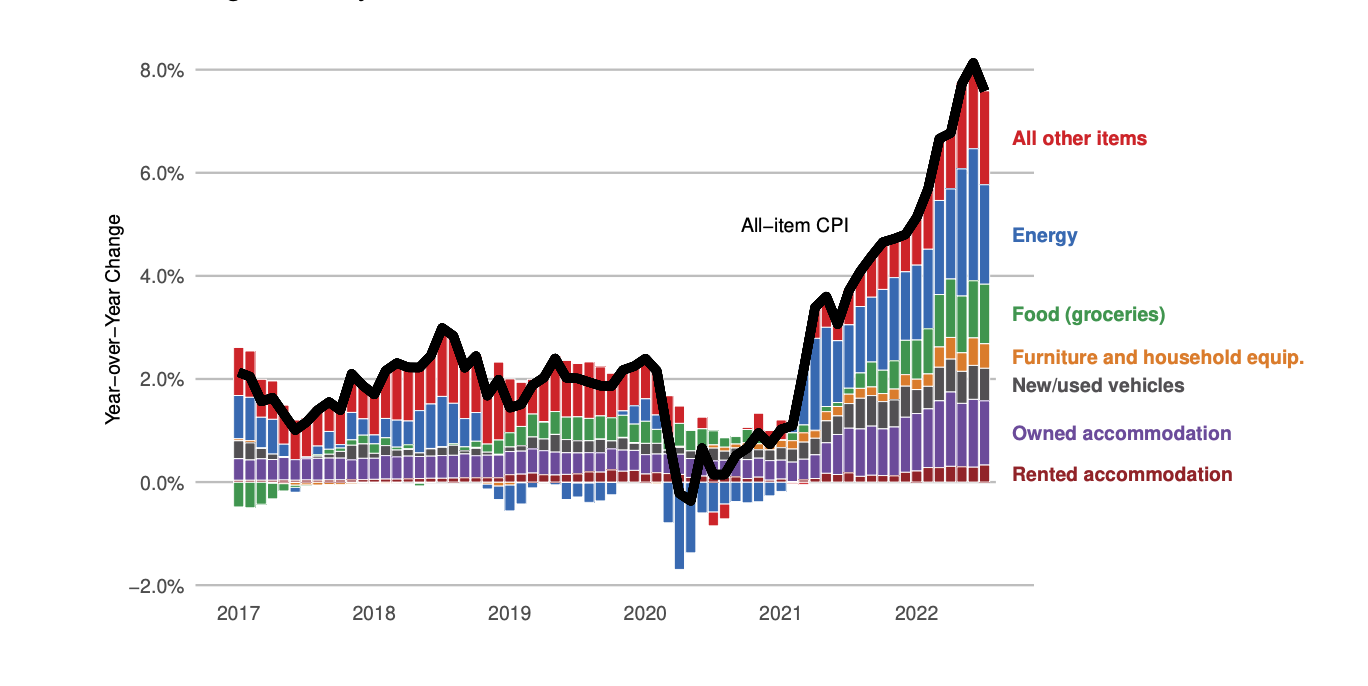
Energy costs as an explicit category had had massive spikes on their own, but because you need energy to do everything else, the cost of energy – and specifically oil – drove the costs of everything else up, too.
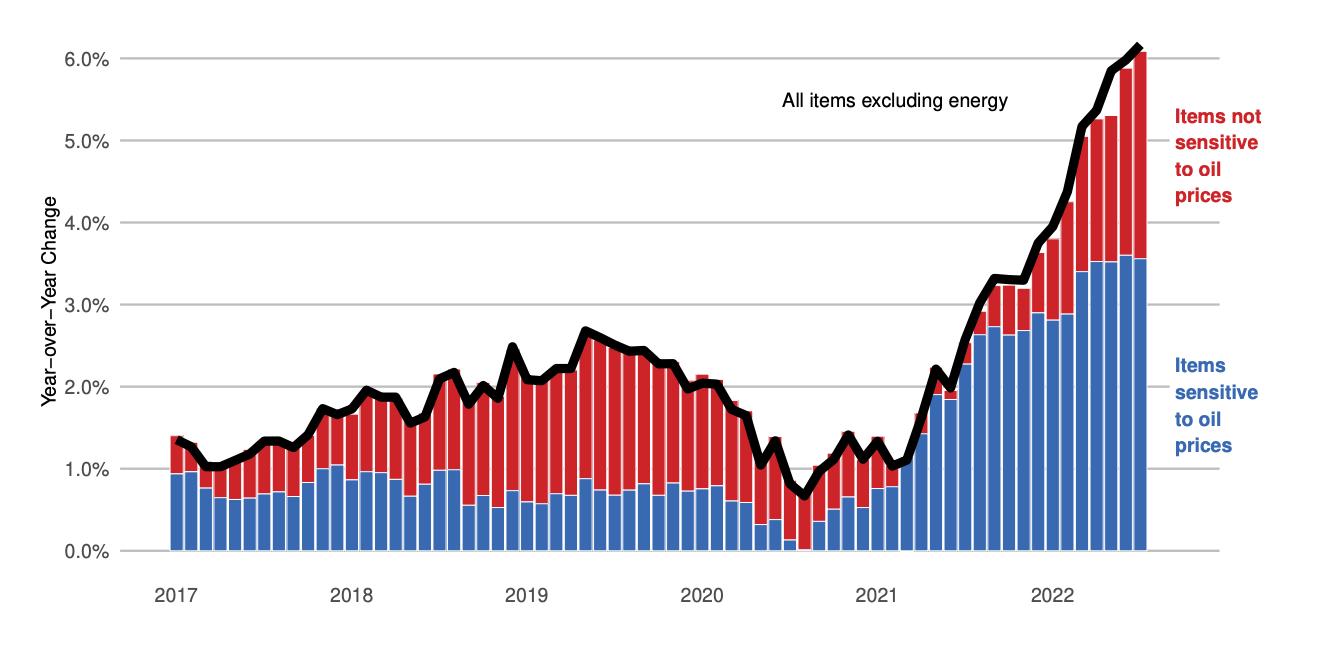
Another Canadian economist, Jim Stanford, agreed but went one step further. He said the oil price shock "cannot be explained on the basis of real economic fundamentals," and rather was the result of "a highly unstable oil futures markets" where "every physical barrel of oil is traded 13 times on paper." Canada's prioritization of oil exports meant that we as consumers were along for the ride of global oil prices, even though we had more than enough at home.
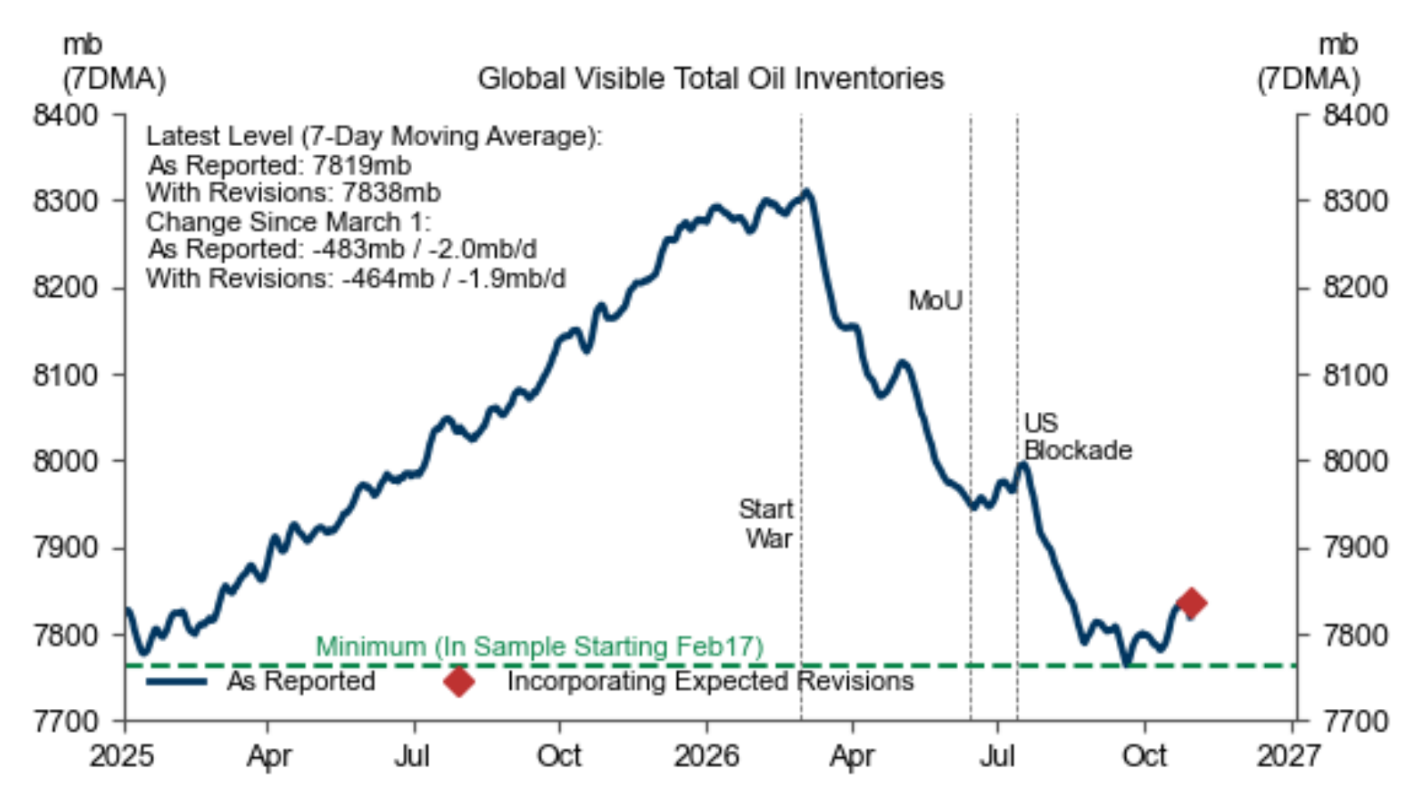
This time, it is different. Because of war in the Middle East and Ukrainian strikes on Russia, global stockpiles dwindled to historic lows, as many countries drew on strategic reserves of oil they have for emergencies.
So what does all this mean for the world?
The IMF estimates that the interaction between the bond market (covered in the last edition of Public Learning) and oil prices could add a full 1.1% to global inflation, 1.2% for "advanced economies," and 1.0% for developing countries. But that understates the problem: if debt becomes more expensive, that will constrain how some governments spend and what they spend on, usually leaving poorer people to bear the brunt, and also reducing much-needed investments in infrastructure and services. While otherworldly AI spending has and will likely continue to mask things at the level of gross domestic product, consumers and small businesses will feel the hurt.
The upshot for many in my world is that there is one proven strategy to help weather this storm: clean energy. Ember estimates that Danish consumers saved a collective $290 million US in the first six months of the oil crisis because of the penetration of electric vehicles. The forecaster DNV says that energy-importing countries are "scaling clean energy three times faster than exporters." This is, as I said in From Strength to Scale this summer, the "relentless efficiency of electrotech" on display.
I find it funny that we created daylight savings time to save energy, first in World War I and have fiddled with it in subsequent energy crises from WWII onwards. This time round, some of us seem ready to kill it and ride around on top of batteries instead.
Things I am still figuring out
Since my interview this week with Amy Verdun, I've been noodling on why Canadian provinces and the federal government are generally bad at working together, at least in the past couple of decades.
We have mechanisms, like provincial councils of ministers and the Council of the Federation, that bring our leaders together to talk to one another, but frankly I don't see a lot of substance coming out of them. It's all well and good to talk about reducing barriers to internal trade, but to do so meaningfully – and in ways that actually help everyday people – is a much heavier lift. To return to the EU, it's easy to laugh at the tens of thousands of pages of laws and regulations you have to adopt to join the common market, but that's because harmonizing entire economies is an inherently complex task.
Is it because premiers can't get media pickup for the hard work, or is there a deeper state capacity problem, perhaps?
What do you think?
Easy Listening
I listen to a lot of music described as "minimalism" or "post-minimalism," much of which follows in the tradition of the great American composer, Philip Glass. His sparse, repetitive, and yet often also grandiose music is among my favourites, but he and his fellow travellers, like Arvo Pärt or Jóhann Jóhannsson, can be a bit sombre, even melancholic at times.
And so it was while searching for something that hewed to that same minimalism but was also warmer and brighter that I found Steve Reich. His Music for 18 Musicians is organized in 11 sections, each based on a single chord. It's an almost hour-long meditation that has that same Glassian repetition but is uniquely playful, as well. It's not quite ambient, but I still feel myself moving with it not-always-conscious ways.
If Steve Reich is a new name to you, don't worry, he was to me too. But he's clearly worth noting. British music critic Andrew Clements said that Reich is one of "a handful of living composers who can legitimately claim to have altered the direction of musical history."
If someone forwarded you this and you want to subscribe, you can do that here. If you want to reply, I read everything.