
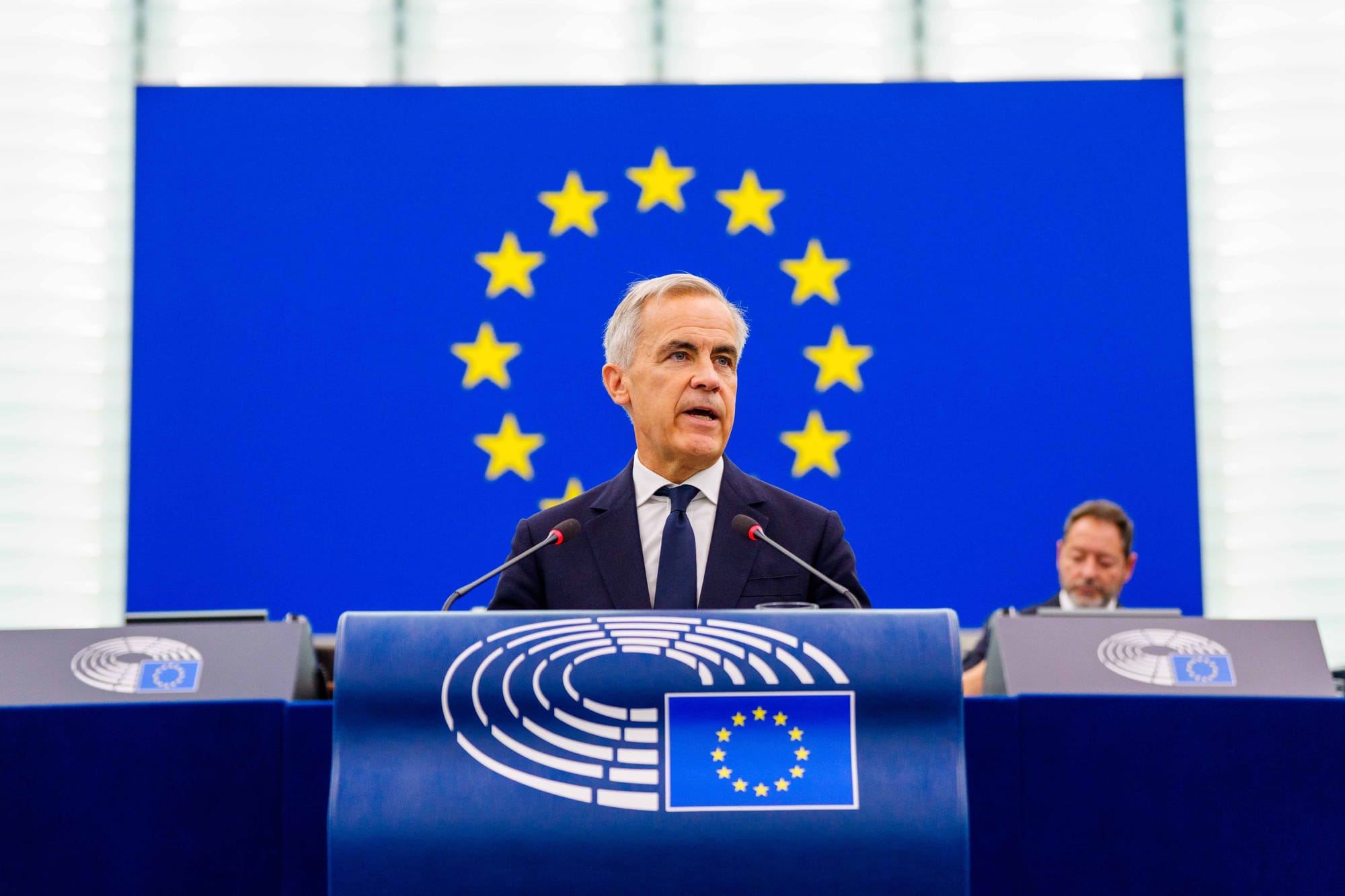
Canada and the European Union have an answer to the "rupture" that Prime Minister Carney described the United States' sudden, and to many, irrevocable, attack on the international order it helped create: an "Alliance for the Future."
The agreement that underpins this alliance comes out of the 21st Summit between Brussels and Ottawa, which, depending on your perspective, either re-states much of what both parties are already doing together, or alternatively, opens the door to significant geopolitical shifts, and changes within Canada and the EU themselves.
But this agreement, and the recent ones before it, are not the starting point of a relationship: Canada and the precursors of the EU have been working together since 1959, in one of the bloc's most significant and enduring – one might even call it "special" – relationships.

To better understand the potential from this agreement and this buzzy term of "associate membership" that's been used around it, I spoke with Dr Amy Verdun, Professor of Political Science at the University of Victoria, Fellow of the Royal Society of Canada, and one of Canada's leading experts on the European Union. I was lucky enough to work with Amy during my undergrad, where she was a second reader on my thesis, and she continues to be a source of inspiration for her thoughtful comperative work on Canada and the EU.
Interview
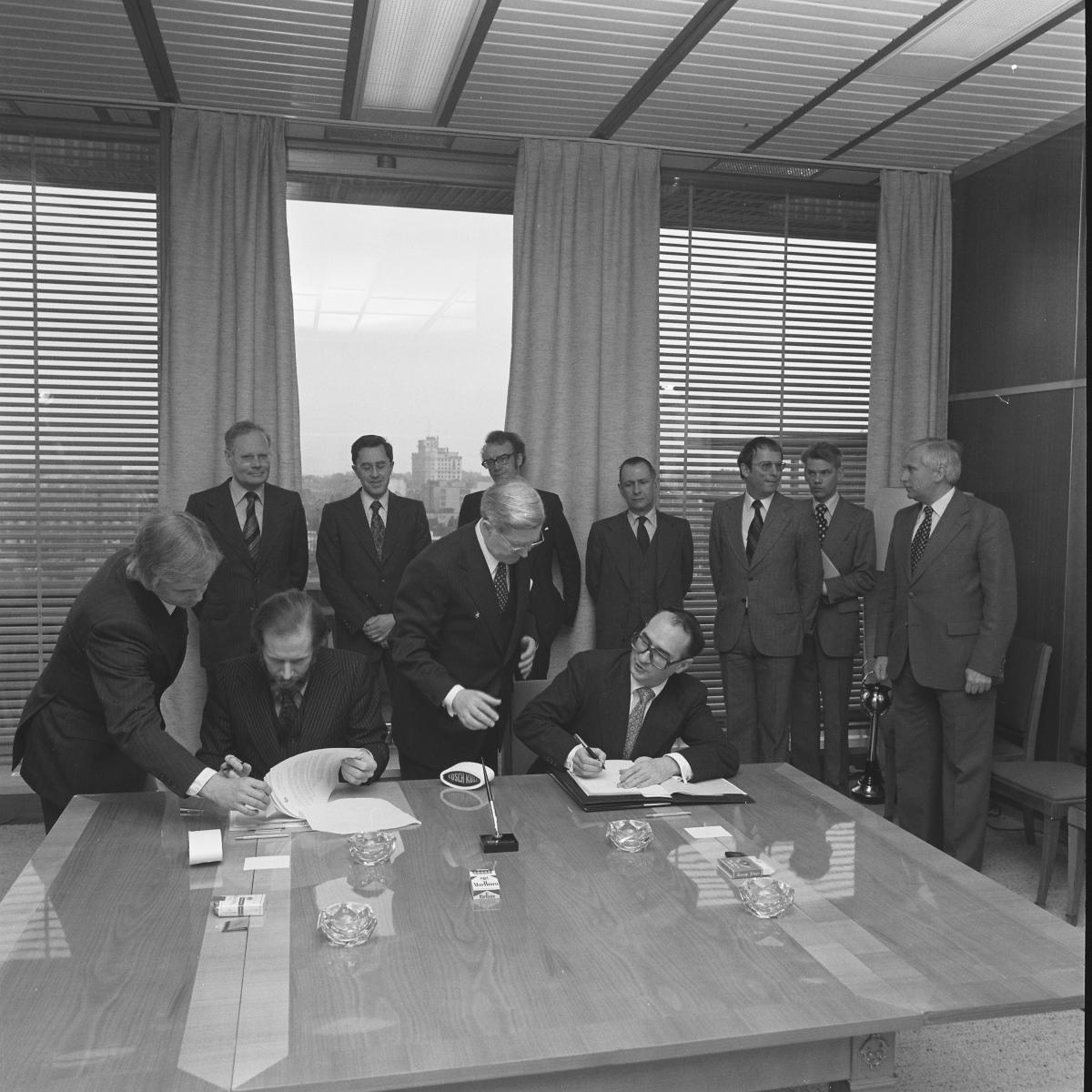
George Patrick Richard Benson: Canada's first engagement with what is now the European Union dates back to a 1959 agreement with the European Atomic Energy Community (EURATOM) and the 1976 Framework Agreement for Commercial and Economic Cooperation. Since the 1990s, the two parties have had 21 joint summits, culminating in the 2016 Comprehensive Economic and Trade Agreement (CETA) and a Strategic Partnership Agreement just last year.
Based on all of this, is it fair to say that Canada and the EU already have a “special relationship,” compared to the EU’s other global partnerships?
Amy Verdun: I think it's very fair. Canada has a special relationship with specific nations within the EU, like France, but also has a special relationship with the EU itself.
There are a range of agreements and processes already shared by the two, as you name in your question, and all of these in their numerous forms that have been over and beyond what it typically has given other countries.
GPRB: There has been a massive amount of media coverage on the idea of Canada becoming an EU "associate member." Some commentary has suggested that the European Commission President, Ursula von der Leyen, used that term as a political tactic to drive momentum. Do you think that the membership idea is just a tactic, or are von der Leyen, and perhaps Carney, trying to do something genuinely groundbreaking here?
Amy: The situation that we're seeing today is predicated on a really troubled relationship with the United States. By early 2025, Canada had concluded that it would need to strengthen trade and defence partnerships beyond the United States. And the European Union found itself in a difficult position: while facing growing trade tensions with the United States, it remained dependent on US support for Ukraine, constraining its ability to respond firmly to Trump's trade aggression.
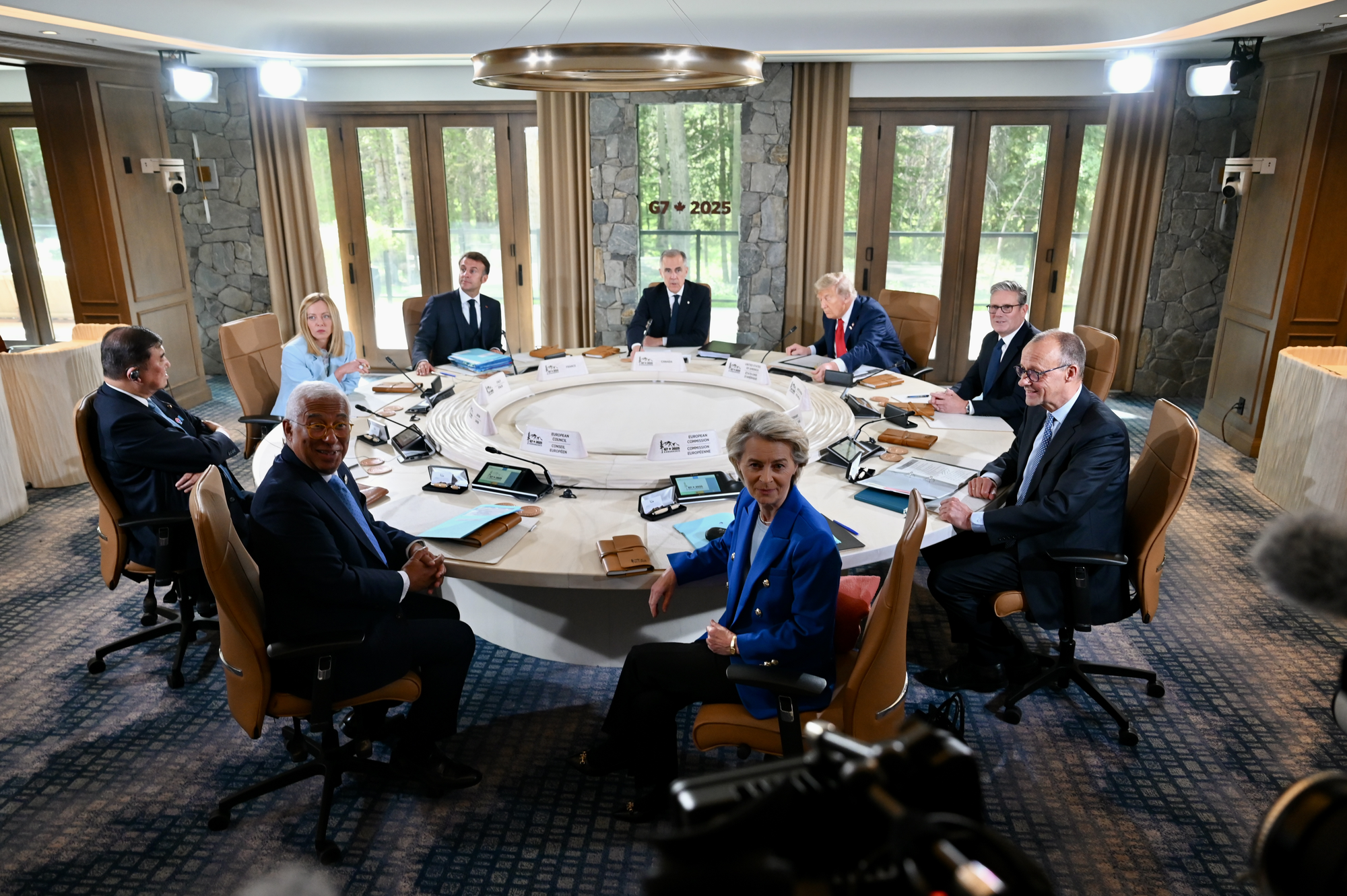
So Canada and the EU found each other, looking for partners to signal they were not okay with the way the United States was dealing with these issues. Prime Minister Carney spoke about middle powers sticking together, and there's been talk of deepening economic relations, even though Canada already has a deeper trade relationship with the EU than other countries do.
So the question became: if we wanted to cement that and go even deeper, what could we do?
President von der Leyen came up with the term "associate membership," reportedly without much consultation, just days before her September speech to the European Parliament. Prime Minister Carney repeated it, among many other terms. In the last month, there's been quite a bit of pushback, particularly from Germany.
The term draws attention because full membership is very serious: it means taking on hundreds of thousands of pages of EU law. But because there is no precedent for associate membership in the European Union, discussions inevitably tend to focus on full membership instead, and therefore what associate membership might mean is then widely debated. It could be less far-reaching, perhaps not involving the customs union or the single market, or an à la carte arrangement, something Europe typically hasn't wanted. Anyone else interested would first need the equivalent of a CETA. We don't really know what will be in that package, because they're still going to negotiate for another seven months or so.
GPRB: Are you saying then that this "associate membership" category would be something that would be defined through the negotiations with Canada, rather than created in advance and then applied in this context -- and that it could then apply to others who want the same type of relationship?
Amy: That's what I'm saying. And I think there will be a lot of people who would not like that path because they don't think the EU ever does anything that way. But in reality, the geopolitical winds have blown so hard that most people feel that we have to stick together and do things differently now that the United States' hegemonic leadership is falling apart.
And if this is what we're now doing, then if it just takes a term, by all means, let's use a term. But then we're going to try to maintain a number of these values, institutions, collaboration that we feel are really important.
GPRB: Canadians are very focused on the geo-strategic implications of these negotiations, but all of this has internal implications for the EU, too. Do you think that President von der Leyen and her constituencies within the Commission have a different structural vision for what the European Union could be and they're using this engagement with Canada to advance that?
Amy: I think that's a really good point. And that it points to the leadership of Ursula von der Leyen, the president of the European Commission. Hussein Kassim has talked about the leadership style of Ursula von der Leyen and how she's the most presidential Commission president in a long time. Maybe the most, but let's leave that to the side.
The point is that she has chosen to be a very strong leader, very executive and is pushing the European Union in the way that she feels it has to go. One can be very critical of such a style, right? Because it's a particular style, but it is observable.
GPRB: And where are people reacting negatively to that style in this context?
Amy: The pushback is coming from member states, like Germany, whose leadership had used this concept of associate membership as a possible way to get Ukraine closer to the EU. There are many debates around this, but it’s possible form of associate membership, short of full EU membership, could work for Ukraine as well – it just may mean that we need different names for relationships for countries inside and outside of Europe that are not full members of the EU.
Keeping the door open for that kind of approach might be more important at this point for German leadership than using this particular term for Canada. So that could also be playing a part. I've also seen German leaders say that they don't really care what it's called, because they are keen on getting Canada closer. So there may very well be a compromise, which may or may not include using the term associate membership for Canada or keeping it for Ukraine or not using it at all. That we don't know. But I think there's probably not as much opposition to the idea of closer ties to Canada, but not the clarity on exactly what you would want to have be part of that package.
GPRB: I was rereading your piece from 2016 comparing federalism in Canada and the EU and I was thinking about how you identify Canadians as often having an "executive federalism" style, where Prime Ministers and Premiers negotiate and push at the individual leader level.
Would you apply the same label and style to von der Leyen?
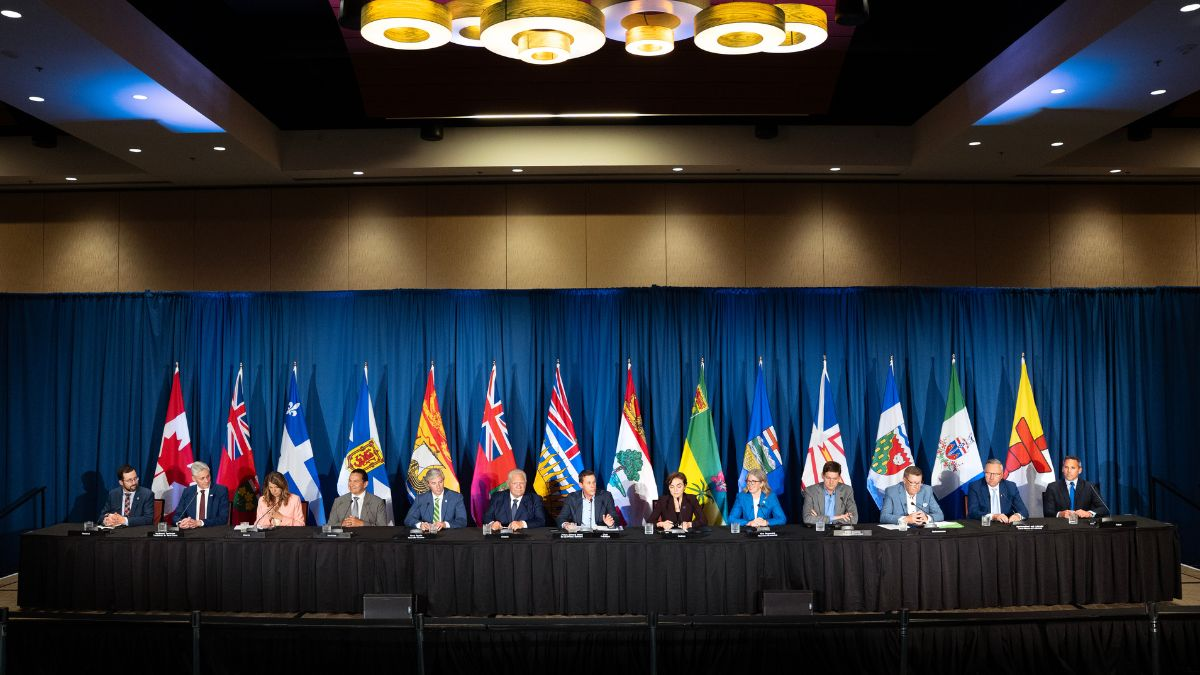
Amy: Yeah, I would say so. Because she is very much focusing on her role in the executive and looking to use that to enhance and deepen European integration. But contrary to what happens in Canada, it's just impossible for the EU to determine its own future. Scholar Fritz Scharpf talks about this as "Kompetenz-Kompetenz" [the "competence" to give itself more power, or more "competencies."] So member states always need to be on board when the EU expands its space, either widening or deepening.
GPRB: It's interesting to think of that in a Canadian context where, as part of the Westminster system, we rely so much on norms that aren't written laws, but shape so much of how we operate. Von der Leyen can't create new laws to give herself more authority, but she may be setting whole new norms as Commission President that later guide others.
Amy: We will see what her leadership results in. There will be member states who are not keen to give her too much power, but it's also clear that the substance of what she wants to do isn't that challenged.
GPRB: And then lastly on these intra-EU politics, pro-enlargement voices worry associate membership could become a sort of purgatory that Ukraine and other aspirant candidates get stuck in. Is that a realistic fear?
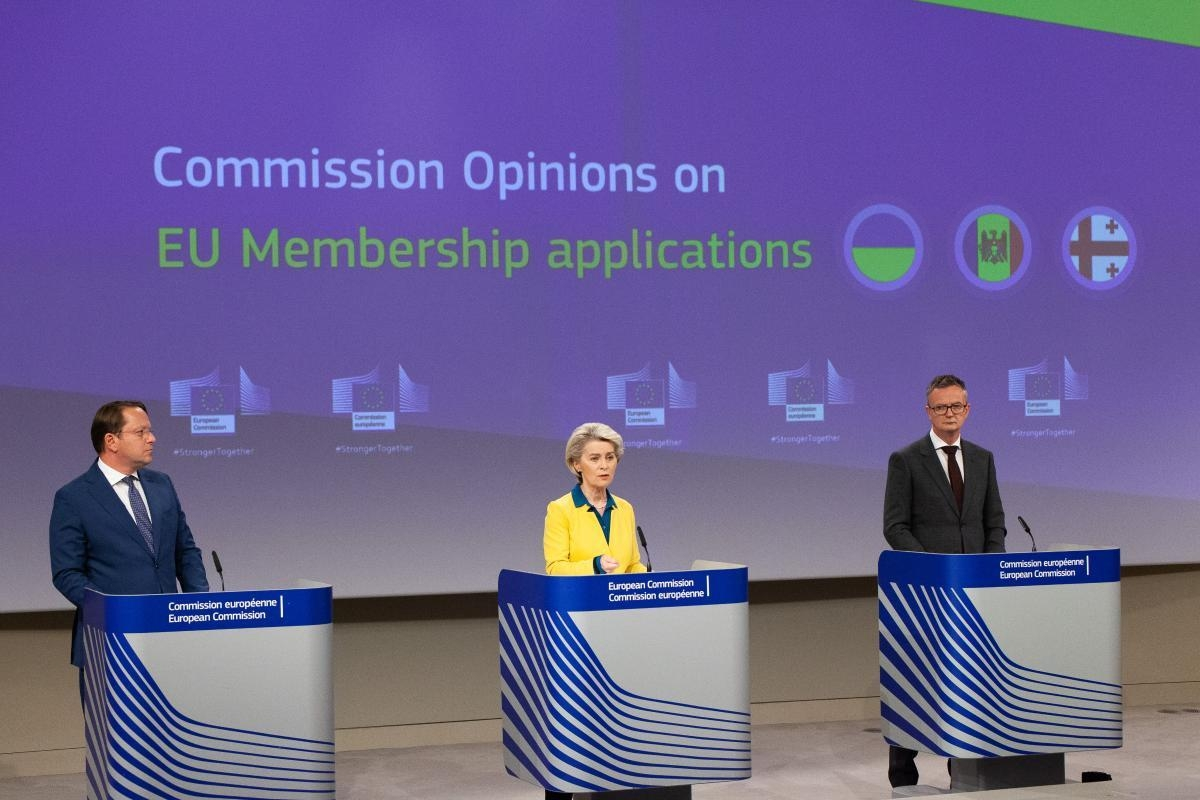
Amy: I think it depends a bit on what the definition of associate membership is going to be. If they keep it just for countries who cannot ever accede [i.e., join] the European Union because they're geographically outside of Europe, then that's quite clean. Then whatever is happening in Ukraine or Moldova or Georgia will not be beholden to what's happening with Canada.
I think that that is probably the smarter way to do it because you don't want to put countries against one another.
GPRB: To flip this question around. We're talking about how the EU's internal structures may change as a result of this relationship and other factors. What can Canadians learn from the EU in how we do things here?
Amy: I was in a session earlier today in The Hague about an OECD meeting on how to keep social welfare states affordable as populations age. No country has figured that out, Canada and EU members included. And those redistribution choices, like taxes, pensions and unemployment benefits, are made close to the people: by the provinces in Canada and the member states in the EU. Neither Ottawa nor the Commission decides them. So we face the same questions.
GPRB: Right, we both face these big-picture challenges around demographics and secular stagnation and so on. Are there any specific policy areas, though?
Amy: The recognition of degrees is definitely one. The "single market" in the European Union context is very much a pillar of European integration and has led to greater ease to move around in that single market compared to what we sometimes see in Canada. I am always surprised that you can get a degree as, let's say a counsellor in Alberta or a doctor or a nurse, and if you want to work in BC, you have to spend hours and hours getting accredited. We have serious shortages and we make administrative hurdles for people who are delivering a service that you know is the same in both provinces.
GPRB: Let's turn now to the Joint Statement from Canada and the EU. It's a forty-six point document that includes statements of shared values, a whole section on "delivery," and then gets into a wide range of issues related to trade, technology, energy, security, and mobility. There's so much in it – what do you think is the most substantive and interesting?
Amy: On trade and economy, I think the core is the CETA agreement, which has not been fully ratified. There are about ten governments that still need to ratify it, with the Walloon region in Belgium having moved forward on this most recently. This agreement could work as a catalyst for fence sitters on ratification, like Cyprus or France, both of which are tricky. But another way forward could be to look at [what's in CETA] and repackage it. And so there is a component that the EU can do that member states would not need to be involved in. And that can then be signed, sealed, delivered, and then it could be ratified.
GPRB: That's fascinating. I hadn't thought about it as a potential repackaging.
Amy: But beyond CETA there's the Digital Trade Agreement, and collaborating on artificial intelligence (AI). We've seen Prime Minister Carney make an announcement just the other day about a German and Canadian company coming together to offer AI services that can be under Canadian law as opposed to, let's say, US or Chinese law. So that there is active industrial collaboration in this area, as well as investment from the Canadian state.
Amy: On security and defence, what is being highlighted here is more of a packaging of existing things rather than a major institutional overhaul. It's more, "this is what we do well, what other things are we going to put under this rubric?"
GPRB: To that point, is there anything there under security that felt new that's been added to the existing Security and Defence Partnership from 2025?
Amy: The Arctic is one. As the climate warms, the Arctic is going to change, whether that's new waterways or access to resources. With the US and Russia active there, Canada and the EU being able to collaborate with countries like Iceland and Norway would be important for ensuring that there's the same path ahead on what it means to be having norms, values and collaboration in the Arctic.
GPRB: Even a maximalist implementation of this "Alliance for the Future" won't realign middle powers on its own, as Carney seems to want. What multilateral strategy should Canada and the EU pursue: working with other blocs, like the African Union, or different kinds of multilateral strategies?
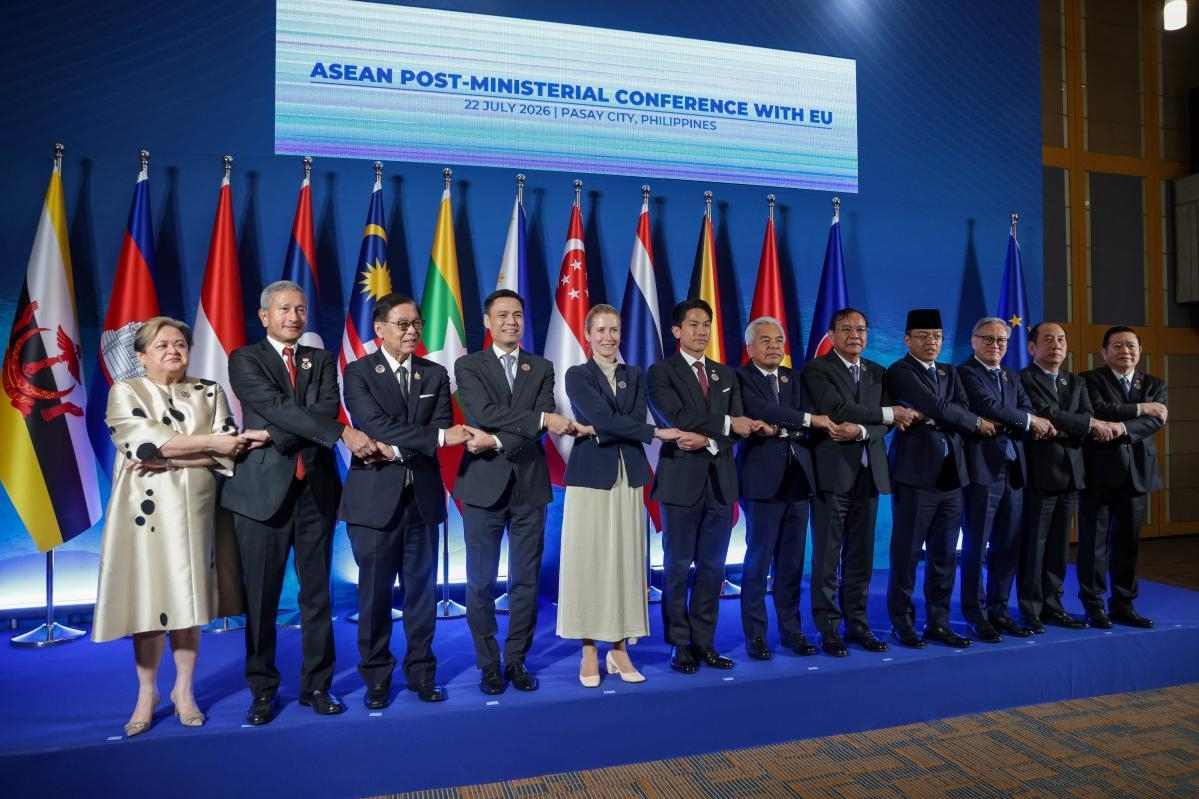
Amy: I think there's two elements here. Firstly: it's a question of whether or not this "Alliance for the Future" or associate membership is possible to produce it in such a standardized way that other countries could also follow that model, whether that country would be, Japan or Korea or Brazil or anyone else who decides it would like to have that same relationship. Would the language of this agreement, associate membership or anything else, be open to others as individual countries?
GPRB: Right, like you said already about associate membership being, at least in part, possibly defined by what Canada does.
Amy: The second question is whether the EU–Canada relationship can help rekindle the liberal international order, or whatever you want to call it, and the institutions that make it up. That could happen bloc to bloc, with something like the African Union, ASEAN, or Mercosur. But the low-hanging fruit is making sure that order holds, and seeing whether others can replicate what Canada and the EU are doing. What exactly they're after is harder to pin down. I've heard von der Leyen ask whether Canada and the EU could grow closer within NATO. The same goes for the World Trade Organization (WTO), which has been a bit sleepy lately. All of that still needs work.
GPRB: So you're saying that maybe the strategy doesn't need to be about cobbling together some really grand alliance for the future with many more members, if you like. But rather it could be to look at these existing multilateral institutions and as a pair of partners, and ask how changes can be made if we're going to deliver on the original promise of this liberal international order. Is that a right way to frame that?
Amy: Yeah, I think that's a possible way that they can choose to go. Because I think if they wanted to figure out what they want to do together between now and June, that's already a lot. But one of the things they want to do, one of the things they've highlighted in the agreement in the communique of their conclusions is to ensure the rule of law in international institutions and values. That's a really important one. So they will work on that. It's just that I'm not sure if in the next six months they can figure out that whole thing until the, you know, with all the details that it requires.
GPRB: So, my last question: the Joint Statement, this "Alliance for the Future" is sprawling and there are so many things to do before next June. If you were advising Canadian policymakers before the June summit, where should they focus?
Amy: The agreement had a lot of aspirational points and a lot of topics, but it needs to focus on concrete deliverables. I think there are easy ones, for example, like Horizon Europe, where Canada could fully join the research program. They've mentioned the Erasmus program for student exchanges. If they can do some of those things, I think that will be meaningful progress for people to look at.
GPRB: For a Prime Minister somewhat obsessed with "delivery" I think that would resonate.
Amy: The international system is important, too, of course, but they're not going to figure that out in six months.
GPRB: Let's hope they get to that sooner, rather than later. Dr Amy Verdun, thank you so much.
Further Reading
- Dr. Amy Verdun, Department of Political Science, University of Victoria
- “Mark Carney’s EU associate membership bid reflects deepening Canada-EU ties amid a changing international order,” London School of Economics (LSE) Blog (September, 2026)
- EU-Canada Summit Joint Statement (October, 2026)
- The Canada Model and Post-Brexit EU Trade Relations: Insights from the Other Transatlantic Partner, edited by Nanette Neuwahl and Amy Verdun (Routledge, 2025)
- European Union Governance and Policy-Making: A Canadian Perspective, 2nd edition, edited by Achim Hurrelmann, Emmanuel Brunet-Jailly and Amy Verdun (University of Toronto Press, 2023)
- "The Federal Features of the EU: Lessons from Canada", Amy Verdun, Politics and Governance 4(3), 2016