
Good morning.
After almost two months in travelling mode, I've returned home to settle into the rhythm of my own home and my habits. I've returned home at the advent of my thirty-fifth year of living, and I'm grateful to be entering it with a clear sense of purpose and an outlet like this to continue to build and explore things that are important to me.
I hope wherever you are, your summer's had space for similar moments of gratitude.
Things worth your time
Metro Vancouver has notable strengths to follow through on the energy transition, but is not translating these into international economic competitiveness – In case you missed it on LinkedIn, the Zero Emissions Innovation Centre has published a new report on the region's competitive positioning as economies around the world increasingly move towards electrification.
I think of From Strength to Scale as a mixture of greatest hits of the energy transition, and some novel Vancouver-specific data points and trends. Key points include:
- Countries around the world are increasingly moving towards electrification as electrotech – batteries, motors, power electronics, and embedded microprocessors – continues to fall in price.
- Cities are leading this transition, with a $438 billion (USD), or 117% increase in energy transition investments across buildings and infrastructure, sustainable transportation, and urban renewable energy between 2018 and 2021.
- Canadian manufacturing is lagging behind in major energy transition technology categories, especially batteries, wind, and solar – in 2024, we exported just $53 million (CAD) in finished products in this area (using a great framework from the Net Zero Industrial Policy Lab's Clean Industrial Capabilities Explorer).
- Metro Vancouver is investing massive amounts in local renewable energy – with about $1.1 billion (CAD) in investments under construction, with another $2.5 billion planned. $250 million of this alone is in district energy, which I continue to think can play a major role in how we deliver heating and cooling in the future.
- The region has built about $101 billion (CAD) in buildings since 2016 that have in some way been touched by the BC Energy Step Code and another $86 billion under the Zero Carbon Step Code, the repetition needed to lay the groundwork for a regional construction industry ready and able to build high-performance buildings consistently and affordably.
- The region's appetite for electric vehicles is well-noted, generally among the highest on the continent, but looking at ICBC data, we were surprised just how strong the commercial vehicle demand was – from a paltry 53 registered vehicles in 2021, to over 5,000 in 2025.
We close the report with a clear prognosis: without a clear energy and economy strategy, the region will continue to deploy others' technologies but risks economic marginalization.
Huge gratitude to my colleagues, particularly Keane Gruending, Fionn Li, and Sarah Lusina, without whom this never would have seen the light of day.
People have always had a deep yearning to explore the bounds of what can be said – I'm finally finishing an essay that I have been stuck in a loop about for months. As I finally made a breakthrough (i.e., I decided to stop trying to stuff more into it), I wanted to ground my final argument in a meditation on societal decadence.
I wanted to remind myself and everyone that decadence is a perennial worry, not something unique to our moment in history, and in my research stumbled onto the Complaints of Khakheperraseneb.
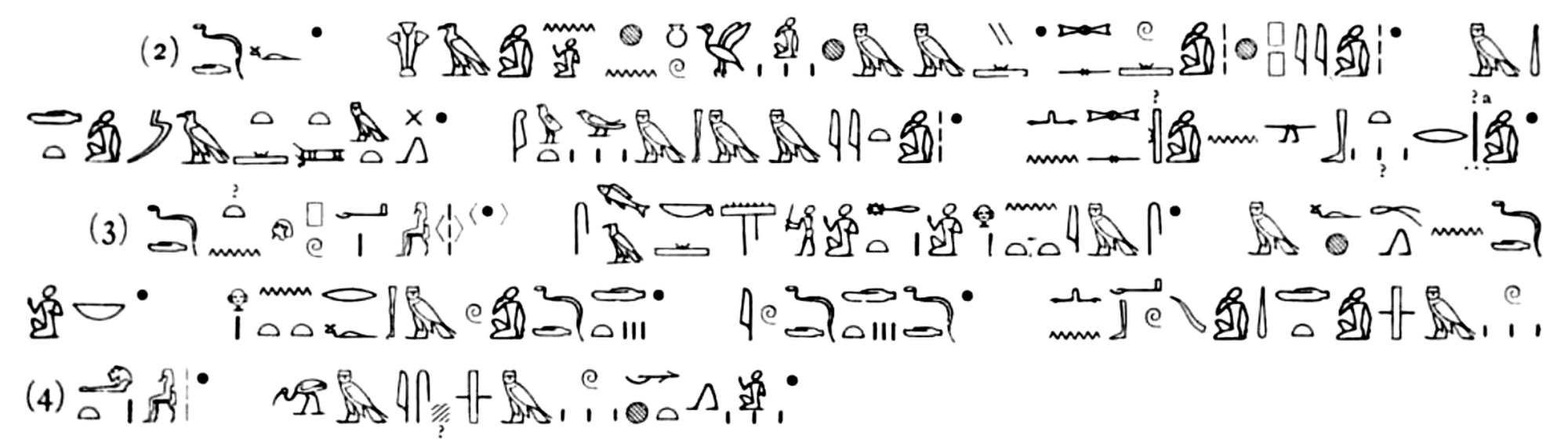
I have a fascination with ancient personal writing because it's so striking how familiar so many of their struggles and concerns are. Khakheperraseneb is no exception, and I found this particular passage from the priest to be especially haunting in how much it resonates almost 3,500 years later:
"Would that I had (some) phrases which were unknown," sayings that were unusual (or) new words not yet been used, free of repetitions; devoid of the phrases of that familiar language which the ancestors spoke. I have drained my body' because of what was in it, to get rid of all that I have said (before),' inasmuch as it is indeed (mere) repetition of what has been said repeatedly."
One Thing I am Still Working Out
How do we judo-flip anti-AI and data centre politics into something that builds, not merely blocks?
Vancouver is the latest among a slew of cities and regions that are pushing back against the development of data centres, seeing them as the most direct way to fight the incredible power and wealth of AI companies.
Many folks know that I find the use of large language models (LLMs) like Claude to be fairly helpful, but I still have existential concerns about the societal implications of how these companies operate and how they see the future.
One aspect of this is supporting both open-weight and open-source models, but the physical infrastructure aspect is equally important, and in many cases, more acute.
Is there a "positive data centre" framing we can achieve? Perhaps where data centres have to make new renewable energy and water recycling investments whilst sharing their waste heat?
The policies and technologies aren't the hard part on this, though; it's a viable political narrative. I don't see one yet, but I remain curious.
Easy Listening
Some music perfectly straddles the line between ambience and melody, and DJ Chris Luno's sets always do so for me. His "sunrise house mix" from 2021 is probably the best encapsulation of that.
If someone forwarded you this and you want to subscribe, you can do that here. If you want to reply, I read everything.