
I can't get the phrase "newsletter bankruptcy" out of my head.
It not only captures the endpoint of informational overwhelm – "I quit, abandon everything" – but also the arc of an entire cycle that begins with a sense of unbridled possibility amidst truly limitless consumer abundance. And it's a trend readily visible in most aspects of consumption in wealthy economies.
Consider fashion:
Once upon a time, a fashion house would bring out two collections per year. Now, fast fashion giant SHEIN can add between 2,000 and 10,000 items per day to its online store. And while the physical quality varies, these are eye-catching pieces that aren't just designed for the masses, but are almost microscopically targeted to whatever trend, look, or use you might have.
The informational world is even more overwhelming. You have the intellectual equivalent of haute couture available on-demand, for any subject, often for free.
So, naturally, the shopping cart piles up: Prada at 90% off; a buy-one, get-10-free sale on Versace; an extra Ferragamo gift with every purchase.
Just like your financial budget, however, your attentional resources quickly run up against reality: how much attention do you really have to spend at any given time? And if your commitments outstrip your capacity, then the account runs dry, and you end up stuck.
We don't have a problem of decreasing intellectual quality; we have a problem of increasing intellectual volume.
And yes, while that increased volume means more bullsh*t than ever before – call it the Temu-ization of writing – never in human history has it been so easy to access the very best of what humanity has ever created and thought. Even our more banal thoughts hold a strange beauty. It is this plenty that has helped seed our collective exhaustion.
But while our attention is a finite resource, just like our budgets, thinking of what we read as merely items to be consumed misses the inherent intimacy of the process: what we read can become a part of us in profound and life-changing ways. Things I have read have not only changed my mind about something external, but helped me understand and interpret myself in new, and sometimes profoundly different ways. This is not mere consumption; I am in relationship with the things I read.
What we read is far more akin to a landscape, a living, breathing set of relationships that shift and change over time. We criss-cross these hills and valleys of ideas as finite beings, variously excited, endangered, awed, exhausted, enlivened, but always held within and never outside of the ground we are upon. Landscapes do not disappear, either. Though our individual footfalls may sometimes be heavy, these places will still be there when we are gone and no matter how small, ideas similarly have reverberations across millennia.
The solution to this overwhelm, therefore, is not thrift or restriction, as we might use to balance our budget, but the mindset and tools used to move across a landscape.
I've spent my entire life honing my thinking and skills around all of this, and I'd like to share that not only because I think it might help individually, but because I believe now more than ever that informational resilience is core to protecting democracy.
Reading across the landscape
I read with a very clear purpose: to understand the world.
Anything that doesn't help me advance that overarching goal tends not to make it through the filter. I can be quite ruthless at times about this, though not always in the ways people might expect. I'm not simply reading textbooks all day, every day. But when it comes to fiction, for example, I tend to only read things that have strong social or political insight, or, perhaps, have unique literary qualities that teach me something all on their own.
Some might find this approach a little mechanistic, but I think of it in the same way that Richard Feynman describes science. Understanding is additive to the beauty we experience in the world, not subtractive.
So I know why I set out to read things, and that helps me filter out not only low-quality information, but also things that don't match my purpose. But what after that?
I approach knowledge and learning in explicitly spatial and ecological terms. I understand and experience knowledge as if it were a landscape, "moving" between ideas as if I were hiking from one peak to another. Sometimes people will even notice this when I am thinking deeply and closing my eyes to picture how ideas connect to one another: in my own mind I am moving between the different places these ideas live, traversing mental rivers and mountain ranges to get where I need to go.
While this is a quirk of my particular brain (a cousin, perhaps, of Temple Grandin's), I feel that there are lessons from seeing the world this way that are useful to others.
I want to lay this out in a series of principles that build upon one another:
- The first is about how to use a map to understand the basics of a landscape – without becoming over-reliant on it.
- The second one is about working with the shape of the land you’re traversing, not just travelling in straight lines.
- The third is about finding variety in the places you move across, as too much similarity risks complacency.
- The fourth is both a caution and an imperative: cultivate a humble curiosity throughout your life.
Principle 1: Learn how to read a map, but know its limits
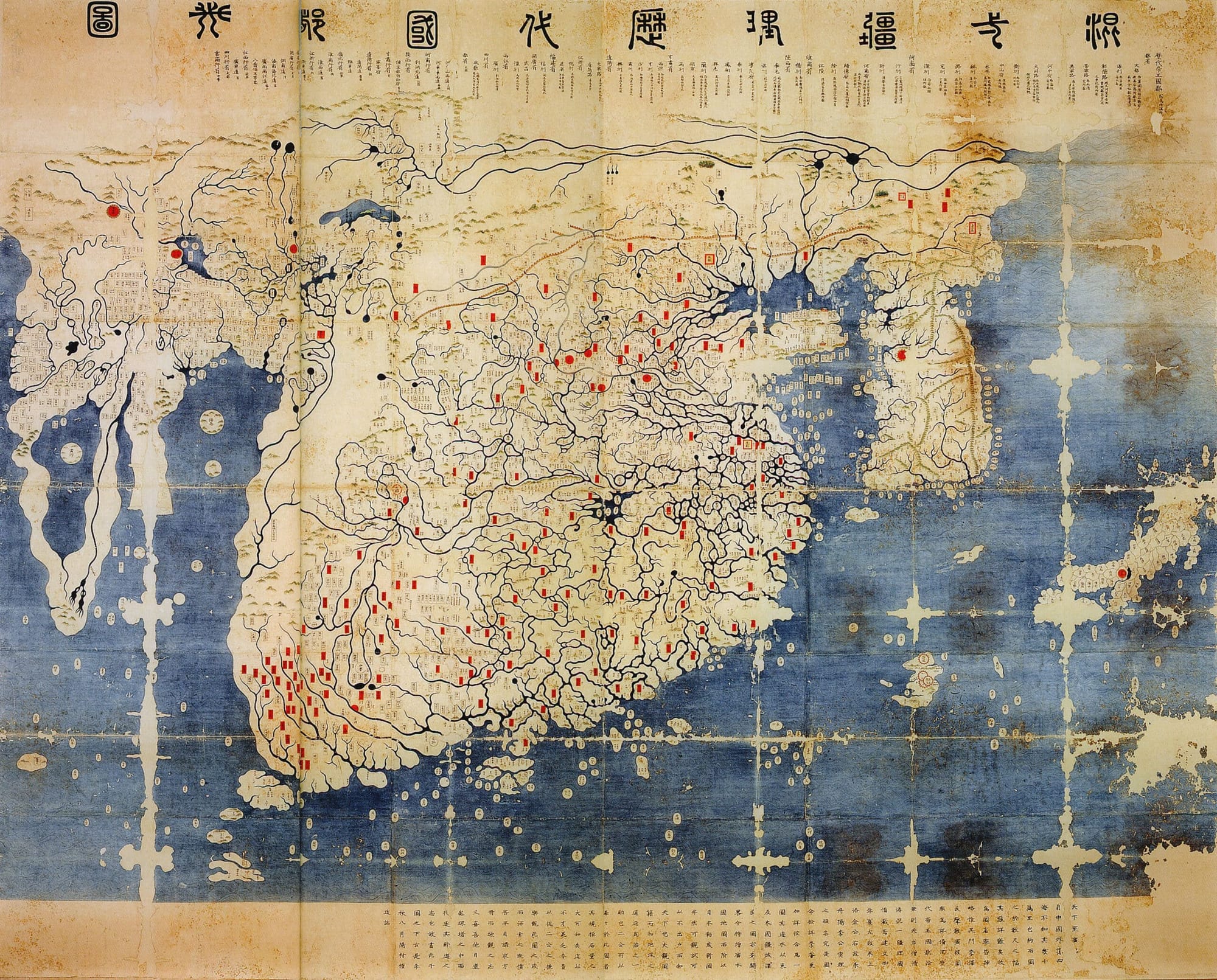
All maps are inherently fictions. They say, "let's pretend all of these other things don't matter for a second so we can help you get from A to B." This is why Alfred Korzybski warns us that "the map is not the territory."
The popular press – within which I include all news, traditional large-scale publishing, and other mass media – is extremely helpful in orienting the world at a high level. It provides, in other words, generally good maps.
To use these sources as effective maps, you need to read them on two levels, direct and indirect: as an initial source of information about an issue, and as a signal for how particular types of people and institutions see the world.
A map of highways and a map of aquifers each contain useful information, just not always for the same people, or at the same time. The Economist, Democracy Now, the National Review and the Burnaby Beacon are all wildly different and (can be) useful – both in the general information they provide, and in the perspectives they implicitly or explicitly espouse. But they are never neutral arbiters, nor do they ever tell a conclusive story, no matter how deep or thoughtful the reporting.
 Meaghen Brown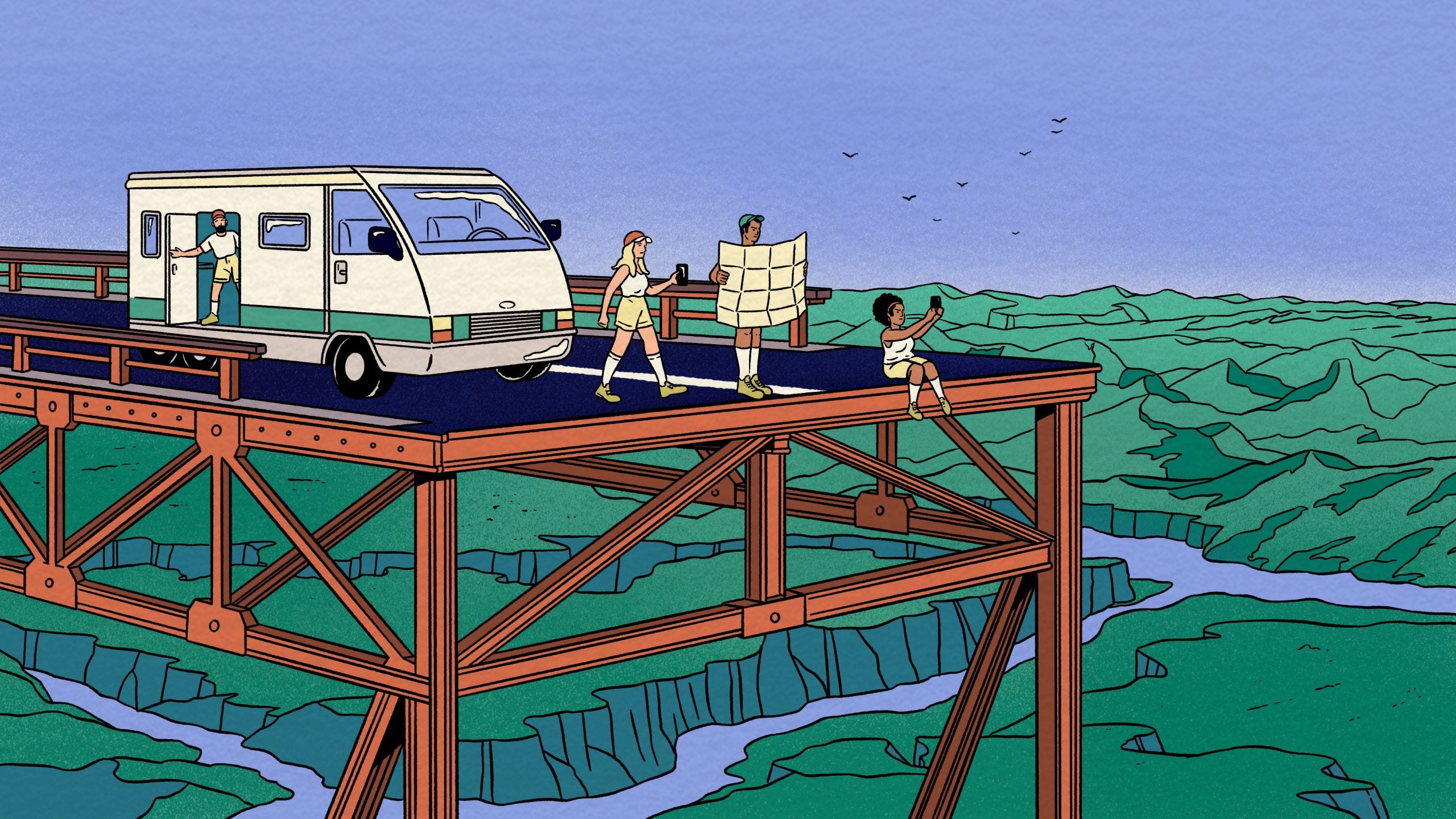
Practically speaking, my advice around the popular press is that thoughtful and manageable consumption means living in a tension between having a diversity of maps and not carrying around armfuls of them at any given time.
To ensure I have diversity in my mass media reading, especially for news, I work to vary different aspects of what I read, from the political leaning of the editors, the target audience (e.g., business vs community paper), the delivery format (e.g., bullet-point summary vs long-form), to their geographical reach.
Naturally, this creates the potential for overwhelm and a corresponding temptation to look for the one really good map that explains everything. These media equivalents of Google Maps, because of their size and scale, feel like they can help us "cover all the bases." The New York Times, the BBC, Al Jazeera, and any other number of large platforms have incredible sophistication and very smart people who work for them, but they are by design a system for simplifying things.
Use them and use them well, but beware that, much like our widespread reliance on digital maps now, outsourcing your wayfinding too often will degrade your mind's ability to know where it is and how to move from place to place on its own.
The only true way to get somewhere is to go there, to move your feet across the ground and encounter the myriad bumps and cracks and twists and turns of the world. You need to know where you are, but you also need to watch your step - and that is an entirely different set of skills.
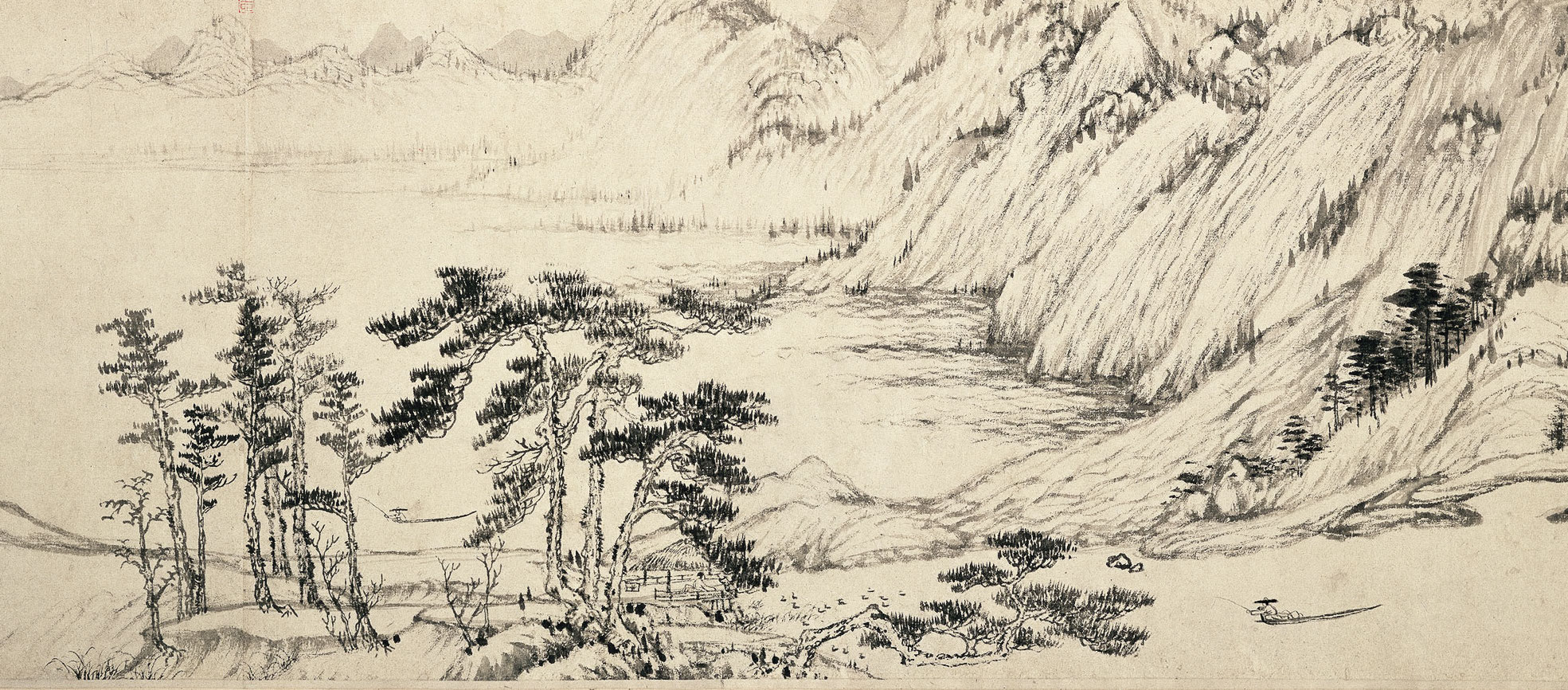
Principle 2: Follow the contours; it rarely pays to go for the peak head-on.
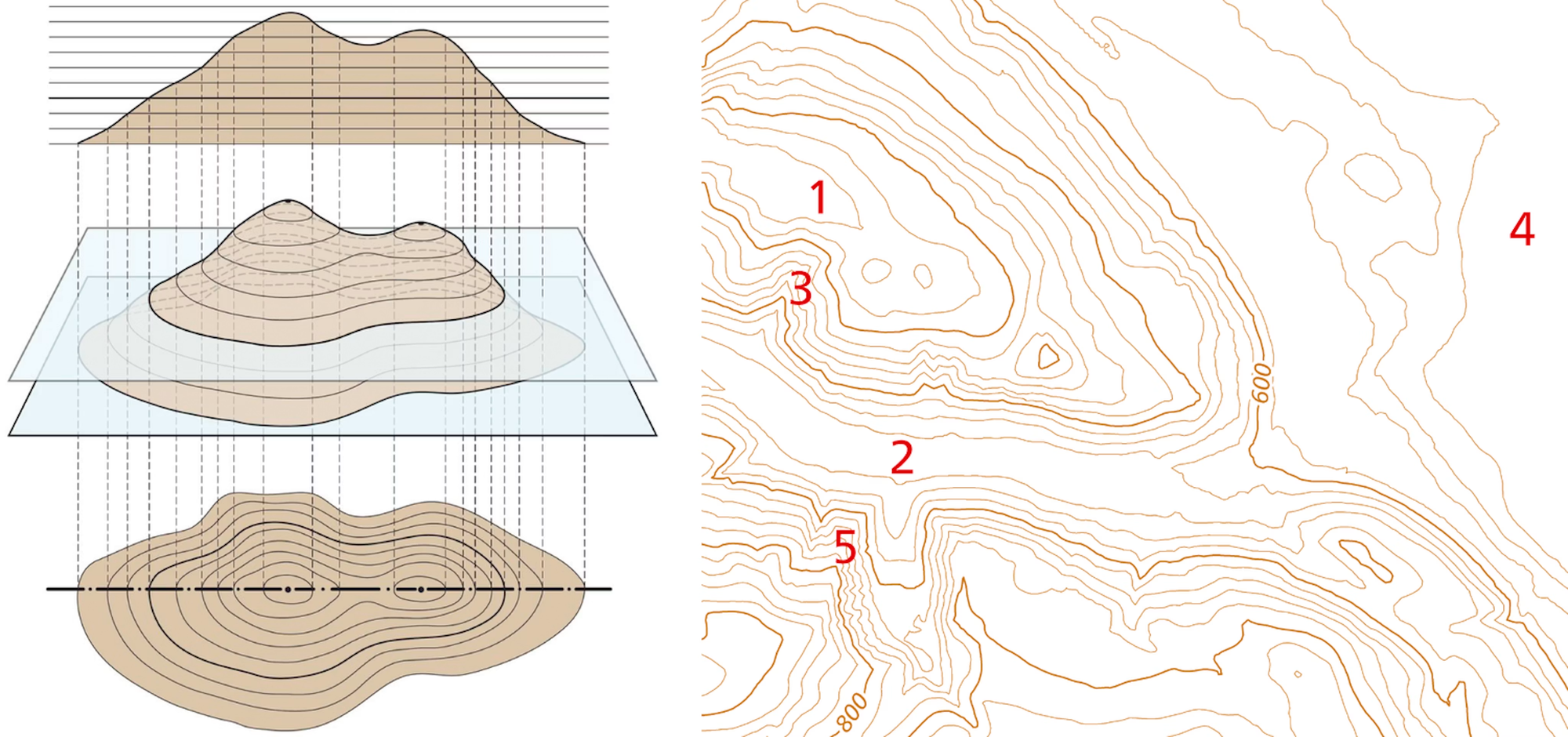
When you're ascending a mountain, the path to the peak is almost never straight. You rarely take a 75° slope head-on; you track its gradations and move upwards in a diagonal motion wherever the contours are friendliest for you to follow. This is a human strategy as old as time.
Despite the literal extra steps this adds to your journey, a contouring strategy has three obvious benefits: it decreases the effort per step by reducing the incline. It creates safety for the mountaineer by shifting their centre of mass (assuming they haul around an overloaded pack, as I do) away from the obvious place they'd fall, giving them more time and space to react to changes. And while maybe ephemeral to some, it's a more beautiful way to experience the landscape.
Taking a contour-based approach to reading offers similar benefits to knowledge-seekers. Climbing a peak isn't only about getting to the top. The fastest way to do so is very obvious: take a helicopter. People often climb mountains via many different routes, appreciating that these are all part of the total experience. The summit is merely one (important) aspect of a mountain, but never the entirety of it.
From a reading perspective, this means taking the time to soak up the entirety of an issue, rather than just the headlines. As much as this might feel like an exhaustive process, I don't think it has to be. I follow the same process whether I am spending 30 minutes learning about an issue or 3 weeks. It goes something like:
- Read a few general news articles to understand the issue at hand and hopefully pick up key terms and concepts, get a general timeline, and find key people related to the issue.
- Read a Wikipedia or other summary article to give a more in-depth overview of the main idea(s).
- Read a biographical article of a key person involved to get a sense of their background, key relationships, major ideas, and, importantly, their critics.
- Get a list of a few of the key foundational texts (including criticisms) on the issue, and skim a few, read summaries, or, with caution, use an AI tool to help summarize them.
- Listen to a podcast or interview from one or more of these key people – especially for authors of a book, interviews can be an amazing distillation of what they're really getting at.
- Read some or all of a foundational book (or other piece of media) that is something of an "origin" point for the topic or issue.
The key to remember in all of this is that feeling confident in your knowledge on a topic comes from spending time in it – and, in my view, in those primary and foundational sources that have defined it. Summaries can help immensely. But without following the contours of the debates and discoveries, you risk climbing to the peak of an issue without ever understanding just how hard it was to get there in the first place.
Principle 3: Climb as many mountains as you can.
Being able to traverse the natural world safely depends on a balance of direct experience and more abstract knowledge. Experience provides immediately useful information within a familiar context ("look out for that cliff up ahead"), and your abstract knowledge allows you to make inferences beyond what you have directly experienced ("let's find the kelp line to see how high the tide comes in here") – both keep you safe. The most effective travellers in the wilderness I know deftly weave together both the things they have directly experienced and their abstract knowledge of the wild.
There is a "trap," however, that comes with having a great deal of experience in a very particular area. Hiking the same mountain or mountain range a thousand times gives you a unique and important set of experiences, some of which will be transferable – but if you change your context, particularly if that change is dramatic, your well-worn experiences might be totally useless.
The only solution is defamiliarization. To travel radically out of the context(s) you're familiar with, and plant yourself on a landscape that is to some meaningful extent alien to you. Go from the rainforest to the desert and from economics to choreography.
In reading to understand, I make this a very deliberate, formal practice. The first part involves conceptualizing the intellectual space I am within in the first place, including questions such as:
- Where would this material be filed within a library? (e.g., psychology, history, fine arts, etc.)
- What's the format of the information? (e.g., biography, textbook, anthology, etc.)
- How has the author been trained? (e.g., journalistic and/or popular authors who write on several different subjects; expert authors who only/mostly write on this topic, etc.)
- What is the lived experience of the author? (e.g., their gender, race, class experience, sexuality, neurotype, bodily experience, and so on)
- Who is the intended audience? (e.g., popular, technical, academic, etc.)
- What continent is the author from, and on which have they primarily resided in their life?
Many people rightfully think of the intersectionality of the authors they read, but I find far fewer consider this wider set of questions about the type of materials they're taking in. Reading diversely in terms of lived experience is extremely important; but if you collapse those many voices into a single format, like a memoir, your view of the landscape can quickly narrow.
The goal, ultimately, is to vary not only one, but most of these aspects of what you read. For North Americans in particular, I cannot begin to stress how important it is to read beyond our continent. Thoughtful readers often focus on varying the lived experience (e.g., race and gender) of authors, but then still stick within the broader soup of our largely inward-looking society. My favourite – and most mind-expanding – days are my most varied: advice from the classical ancients, a contemporary personal essay, a long-form scientific explainer, a Royal Commission abstract, and a deep-dive podcast interview from a highly recommended author I have never heard of before.
I have engaged in this terrain-switching practice for such a long time now that I can even feel my mind begin to crave the change of scenery long before I can even name it consciously. The more you instill this practice in yourself, the more you will come to crave this variety – and notice its absence in yourself and others.
Principle 4: Move with humility, no matter the terrain.
Every landscape – from the top of Everest to the most banal street corner – contains hazards. I've summited mountains without a hitch, but once broke my wrist when I absentmindedly let my bike become unbalanced at a dead stop. By the same token, I've been as awed by my neighbour's gardens as I have been by the grand architecture or near-endless beaches seen in my travels.
The protective force, and more importantly, the expanding force of these positive experiences is humility. When I am most grounded in openness, generosity, and modesty – a state I am ever-seeking, not forever in – I am best able to take in the fullness of what's in front of me, both its dangers and its beauties.
I choose humility here very carefully. Not fear, not vigilance; humility.
There's a strain of argument in intellectual circles about something called "epistemic trespassing." As outlined by Nathan Ballantyne, a trespass occurs when an expert begins to work in an intellectual topic that they were not trained in without commensurate care and respect. For some, this is at its core an unacceptable breach of protocol. Expertise must be respected, the argument goes, and one has to earn one's way into a field before making any claims within or about it.
It's easy to dismiss this concern as elitism or gatekeeping, but there is a clear rationale for it. There is a history of intellectual chauvinism where individuals or whole disciplines barge into another space to overlay their ideas over top of others', or, further still, to make an explicit imperial claim to an area of intellectual work. Edward Lazear was strikingly explicit about this in 1999 when he celebrated economics as having the capacity for intellectual "imperialism, writing:
Economics is not only a social science, it is a genuine science. Like the physical sciences, economics uses a methodology that produces refutable implications and tests these implications using solid statistical techniques. [...] These ingredients have allowed economics to invade intellectual territory that was previously deemed to be outside the discipline's realm. [emphasis added]
About ten years later, in the midst of a deepening Great Recession, the more humble and thoughtful economist Paul Krugman would write about the need for the profession to "rethink its foundations."
Economics has some particularly loud figures known for their overreach, but every discipline has its own version of the hiker who disrespects the locals, plays loud music on the trail, and doesn't take their garbage home with them. Chemist Linus Pauling promoted vitamin C as a cure-all; entomologist Paul R. Ehrlich forcefully claimed the world was headed to collapse because of overpopulation; even mostly-loved Neil deGrasse Tyson got in trouble for his ideas about needing new government systems based on "pure reason". Some reflected and evolved; others doubled down.
Ballantyne does admit in the end that he suspects we "must trespass to answer most important questions." We may need "easements" or "rights of way," he says, to allow for the safe passage of people between fields of ideas. But this is still a highly restrictive, bilateral ("I will let you come in") conceptualization. A more apt metaphor is the British concept of rambling, a set of inherent rights and responsibilities that allow for people to move through the land of others with respect and care.
Those who practice what we might call "intellectual rambling" with care and genuine curiosity can help generate profound discoveries. Seek these people wherever you can find them, and avoid those who hold that any particular worldview or training has a uniquely privileged access to truth in the world.
The risks of trespassing may seem greatest for those who read in order to produce new intellectual work, but the danger begins at the point of reading, not writing. Every reader is a rambler. Each of us has the right to walk across terrain that is not our own, but we must be conscious not only of our responsibilities to others, but also of the hazards that our fresh eyes may struggle to see.
The crevasses of the "easiness effect" always lie underfoot. The internet generally, and large language models (LLMs) like Claude and ChatGPT specifically, forever lure us to make an overconfident step, mistaking accessibility of knowledge for genuine understanding. An overly bold assertion in a conversation is a forgivable faux pas, but consistent dismissal of complexity and nuance has profound consequences in the creation of new ideas, and especially in decisions about how to govern our society.
The only way to avoid these pitfalls is to bring this rigorous humility to the way in which you learn. Julia Galef famously described this as a "scout mindset," a practice of orienting your thinking towards accuracy, rather than seeking to have existing beliefs confirmed. Bruno Latour called for an approach to the critique of ideas that was oriented not towards debunking, but towards "assembling," and to hold objects in the world – physical or conceptual – as things that are "fragile and thus in great need of care and caution."
Galef, Latour, and many others offer laudable specifics around technique and approach, but the starting point for all of this is simple: it's to see a humble curiosity as something you continuously recommit to as you learn, not merely as an initial catalyst.
We are always walking with others
Taken together, these principles and techniques offer solutions to individuals drowning in a sea of words and ideas that they can't keep up with. But beyond their personal benefits, these approaches equally have a societal resonance.
People across time and cultures have worried about their society's degrading attention and a public discourse they felt was growing more shallow and venal. My favourite example of this concern is the Ancient Egyptian Complaints of Khakheperraseneb. This ~3,500-year-old lamentation on the dangers of an intellectually closed society has an eerie resonance with today:
It is painful to remain silent about what is heard. It is misery to reply to the ignorant man. To criticize a statement breeds enmity. The heart does not accept truth. [...] A man's only interest is (in) his own words. All men put their trust in crooked (things). Correctness of speech is abandoned.
Similar complaints reverberate today from figures like Ross Douthat in the West, who bemoans our increasing decadence or Qian Liqun's critiques of Chinese elites as "refined egoists."
Whether you diagnose the problem as one of decadence or abundance, or, as I do, both simultaneously, the overwhelm experienced by individuals accretes to the societal level, with profound implications.
I wrote earlier this year that the public debate over data centres is producing what I called "epistemic fragility." By this I meant that the debate is about more than the societal implications of a controversial issue, but that much more foundational aspects of how we understand the world are fraying and polarizing within the debate. Central to this particular fraying, and equally to the widespread intellectual malaise that permeates this historical moment, is the unsteadying volume of diverse, useful information in front of us.
It's amidst this churn that the pressure for reduction crystallizes. The things we read become mere blips on our attention, or, worse yet, projections (read: clout) to others about the kind of person we are and the things we believe. We lose not only the connections between ideas, but, even more importantly, between people.
But these words and pages are not atoms floating in a void; they are the pebbles, leaves, droplets, petals, and seeds that make up the living, breathing landscape we are always within and upon. Staying in connection to this landscape of ideas requires of us a conceptual understanding via our maps, yes, but also a willingness to move across these interconnected spaces with intention, care, and thoughtfulness – not merely for the landscape, but for the others who walk upon it.
In this kind of practice, reading achieves its highest form: a dynamic accumulation that shapes a sense of interconnectedness and appreciation for the world. I see the world's beauty in a fuller form because of this, and the bonds that I have with people who live far, far across the terrain of ideas and values from me.
Distance is not the same as disconnection.
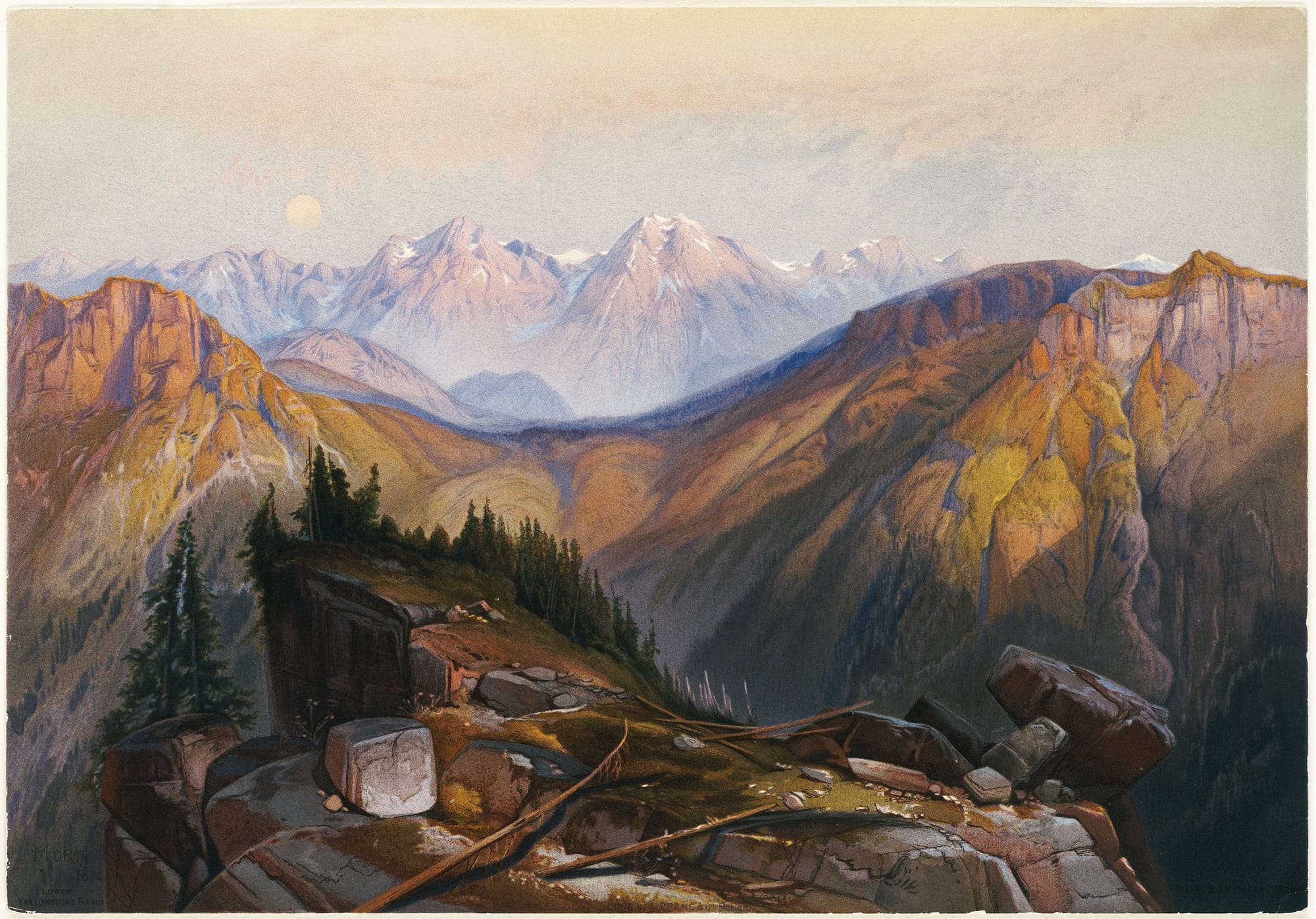
There is a common phenomenon at the core of reading something truly great, and the particular landscape experience of summiting a mountain. You are simultaneously within and atop the world. You can perceive that there is something vast that extends beyond you, some of which you can momentarily receive, but the full expanse of which will always remain ungraspable to you. The things our eyes and our minds take in and that our feet walk across both ground us and bring us closer to that heavenly latency.
Take a step, turn the page.