You Need to Understand State Capacity


Why does so much stuff suck these days?
This seems to be the question many of us living in wealthy democracies seem to be asking ourselves, certainly in North America.
Now, some of this is undoubtedly an algorithmic perversion of our attention, but there's a truth to it, too. It's easy (and in many cases correct) to think of this as a purposeful "enshittification" when you see the products you buy getting smaller, worse, and more ad-laden.
But what about the things that come from government?
When it comes to many of the daily experiences that matter most to us – getting healthcare, the teaching of our children, having our identities and privacy protected – our sense is that our governments' ability to deliver this is waning. And on big-picture issues, like fighting climate change, creating broad-based prosperity, we trust them even less.
This is a problem – and indeed a crisis – of state capacity.

"A state that takes good care of its people is strong and prosperous; a state that does not care about its people is waning and weak." - Xunzi
State capacity, as a field of inquiry, fundamentally asks the question: If a government sets a priority, what ability does it have to achieve its intended outcome?
In seeking to answer this question, a range of quantitative and qualitative questions emerge about the state being examined, and which collectively determine that state's capacity. Questions asked of a government under inspection include:
While much of the thinking around state capacity implies that there is a definitive set of public goods (e.g., social welfare, environmental action, etc.) that should be the ongoing objectives of the state (not, for example, the ability to conquer others), ultimately, the normative judgments of state capacity are about efficacy, not about moral right.
In one sense, these are not new questions:
Xunzi (荀子) was writing about this in 200's BCE Confucian China. The French First Minister of State. Jean-Baptiste Colbert, in the late 1600s, typified an early modern view of considering and increasing state power via mercantilism. And many, many others.
But during the Cold War, a systematized way of asking and answering these questions emerged that, until very recently, shaped how we thought of how capacious different states were.
The work started with largely Anglosphere scholars trying to understand how states developed in parallel to, as part of, and overtop of economies, particularly in trying to understand the "East Asian Miracle" in the 1970s and 1980s. Using Max Weber's thinking about bureaucracies as a foundation, they investigated how Western states' creation of systems of private property, tax collection, and professionalized militaries led to societies that were healthy, wealthy, and stable. Many hoped to reverse-engineer these processes and apply them in the low-income countries where the West and the Soviet Union battled for dominance.
Over time, state capacity diffused out of the academic world and became applied via global development agencies, especially the World Bank. Contestations over local conditions, new insights from empirical data, and perspective shifts brought on by the end of the Cold War, the "War on Terror", and otherwise continued to broaden the concept in a very much global dialogue.
Like all disciplines, a degree of orthodoxy and methodological laziness eventually settled in. As Anne White's forthcoming work on Canadian state capacity identifies, despite ongoing failures and challenges to actually deliver on its agenda, the Government of Canada continues to score extremely well in World Bank, OECD, and Chandler Good Government Index rankings (14th in 2025).
As any Canadian can tell you: this feels profoundly at odds with out everyday experiences, and as well as on strategic issues, for example on climate action.
She highlights that Canada scores exceptionally well on the processes and institutions it has in place — the rules, the structures, the oversight mechanisms — but that these high marks mask a growing gap between the system's formal architecture and its actual ability to deliver results. The machinery looks sound on paper; it is struggling in practice.
But how did we Westerners get from (often arrogantly) studying others' lack of capacity, to fundamentally questioning our own?
The majority of people living in wealthy, industrialised democracies live in places where, despite vast sums of money spent and the energies of dedicated, thoughtful public servants and elected leaders (among others), we are not getting the outcomes we want.
People are rightfully angry about housing prices utterly disconnected from income; creaking health care and social services that have growing wait times and decreasing service quality; and infrastructure that is crumbling and not ready to withstand a changing climate. The list goes on, and on.
But how can we be so wealthy and powerful and yet see our system continue to degrade?
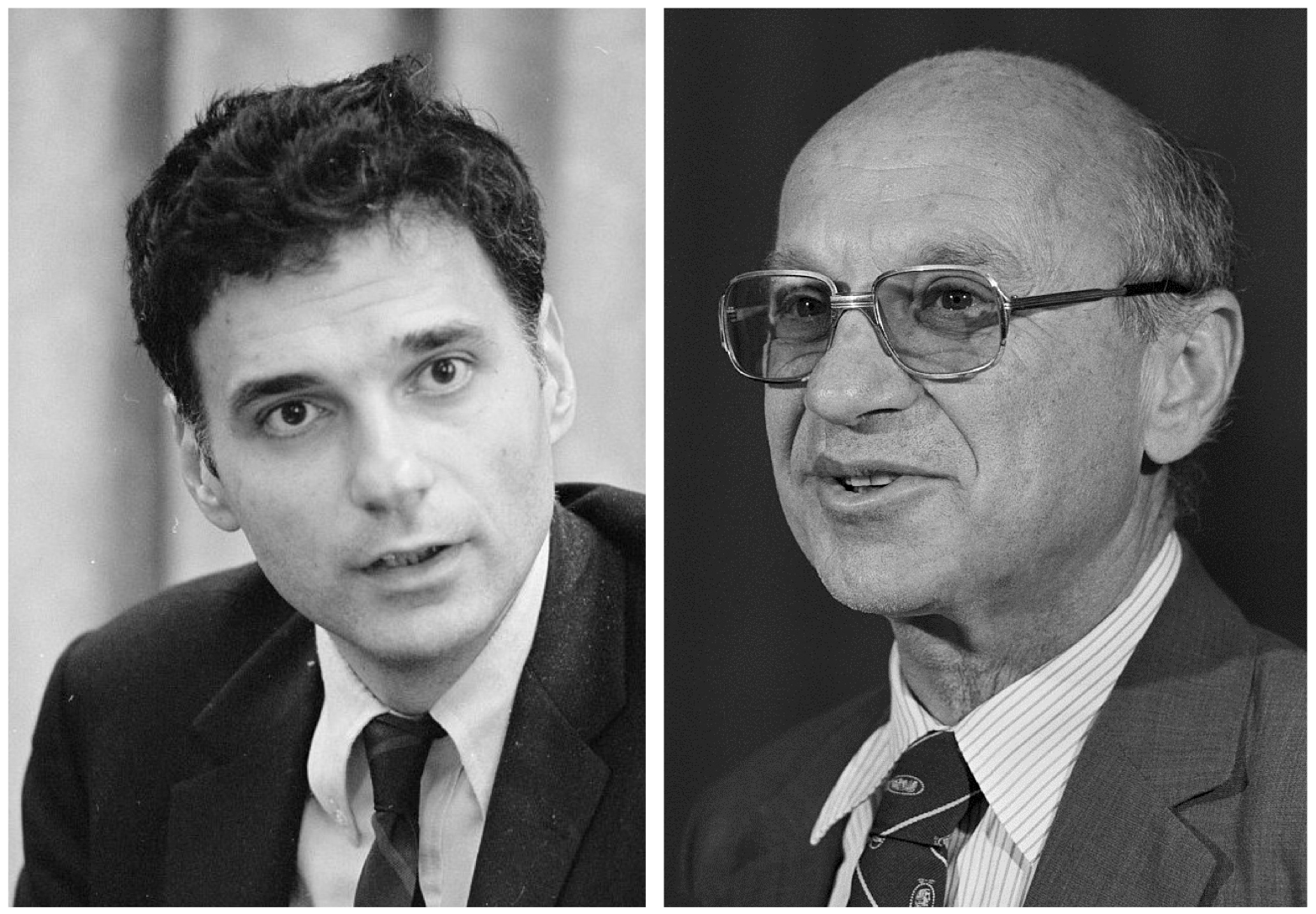
Brink Lindsey of the Niskanen Centre has one of the single best explanations of how we got here that I have ever read. In State Capacity: How We Lost It, and How to Get It Back, he lays out a two-part story that's exemplified by the two men above.
Conservatives in the United States (and to a lesser extent throughout the Anglosphere) have become reflexively and dogmatically anti-state, he argues. This position hasn't come from principled libertarianism, however, but rather a rhetorical strategy with extremely selective implementation. Over time, lobbyists and "extremely wealthy and extremely tax-averse individuals" came to design policy that had maximal pecuniary benefits for themselves, even as they railed about the overreach of the state for the common citizen.
The results, channelling Steven Teles' "kludgeocracy," are "messy, cumbersome government by indirection: heavy reliance on tax preferences in lieu of spending programs, and the fracturing of government activity into large numbers of overlapping programs with responsibility divided up, and blurred, across multiple agencies and levels of government."
Lindsey is even-handed, however, in identifying that where we are today is not merely the product of a singular Conservative intellectual regression. Progressives have to shoulder a fair share of the blame, too.
If the virulent anti-government perspective is typified by Milton Friedman on the right, his counterpart on the left comes from the people-power crusader Ralph Nader.
The 1960s and 1970s saw the emergence of the New Left, a diffuse series of interconnected movements – racial justice, feminism, environmentalism, localism – that brought the state, not just capital, into the centre of political critique. Whether attacking the quiet hegemony of racist "Jim Crow" laws that segregated people, or sexism in the workplace, or corporate capture of regulatory bodies, it identified the unjust use of power everywhere, not just in (men's) workplaces and at the ballot box.
Even as progressives sought to increase the scope and scale of government, they simultaneously and purposefully slowed its movements to prevent administrative diktats that would harm vulnerable communities. The emphasis on process would eventually create what Nicholas Bagley has called "the procedure fetish," an environment where the steps one must follow become more important than the outcomes one produces. Such a system, he argues, breeds an environment where "instead of instruments of public aspirations, agencies become the bastard stepchildren of a damaged constitutional system" where inefficiency reigns and insider dealing is the only way to get things done.
My read, building on Lindsey here, is that this procedural re-orientation came exactly at the same time as major "high modernist" schemes for social betterment, like large-scale public housing, buckled under the dual challenge of external hostility and planning principles that were abstracted away from the humans who had to live in them.
The collapse of the post-war coalition for large-scale social and economic development throughout the West (and active hostility from the emergence of Neoliberal ways of thinking) meant that many progressives became more and more immediately focused. Wins were to be found within the "administrative state," where progressives vastly outnumbered conservatives in the bureaucracy. Wins were had, but the dendritic spread of more and more policies, programs, and requirements made it difficult to even honour the process, let alone deliver meaningful outcomes.
It wasn't that big things weren't theoretically possible – and the siren call of the grand social programs of the 1940s to 1960s forever hangs over us all to this day – but the day-to-day experience of delivering these ambitions cowed even the most ambitious.

Puzzling over how states can efficiently deliver on the things that do really matter is, as said, not a new question. Max Weber worried about the "iron cages" of bureaucratic processes supplanting outcomes, while William Niskanen fretted about civil servants trying to create fiefdoms of prestige. While important intellectual conversations, it wasn't until COVID that these questions took on an existential valence in the broad public discourse.
The creaky state of many public institutions, particularly healthcare, became apparent to everyone. Decades of outsourcing and privatisation had hampered some response capabilities on the ground, but even at the centre of government, the ability to foresee, plan, and coordinate was often strained beyond recognition – and sometimes to the breaking point.
What has followed since the pandemic is an increasingly intense conversation about what was wrong with governments, particularly because many governments employed more people than ever and spent more money than ever. Why did it feel like everyone was working so hard – both inside and outside of the public service – and getting less and less?
The simple answer is that this intuition is at least partially true. The more complex reality is that this "less for more" perception reflects changing social expectations.
My grandmother worked in a one-room schoolhouse in rural Alberta in the 1930s. The expectations of her pupils' parents were, I think it's fair to say, quite modest by today's standards. When I encountered her teaching style as a child, I was struck by how much she emphasised repetition ("drill and kill," to its critics) in trying to get me to learn something. Parents today are much less keen on such an approach, in part because they want teachers to help their kids be fulsome people, not just adept factory workers. Our expectations have shifted.
We want – and I think rightly – more from our public services, both in terms of what they offer, and how many people they serve.
The world is also much more complex than when governments first started thinking of themselves as service providers. The days of defending the borders and building some roads are long gone. States need to do a multitude of complex, delicate, and interconnected tasks – and after decades of saying they can't do these things, many have internalised that story.
Nowhere do these changing expectations hit harder than in the digital world.
Citizens both want and need a government that they can engage with digitally, whether renewing their passports, getting a building permit, or recognising their marriage. Though initially a wealthy countries' game, the leapfrogging of lower-income countries here has been a cause for much consternation.
These growing challenges by the wealthy countries club, the OECD, which wrote in 2025 that, on average, OECD countries score 0.61 out of 1 on the Digital Government index. With the example of governments' big datasets, only 47% of member countries made their high-value data publicly accessible, with that number falling to 42% for health specifically, and just 37% in education.
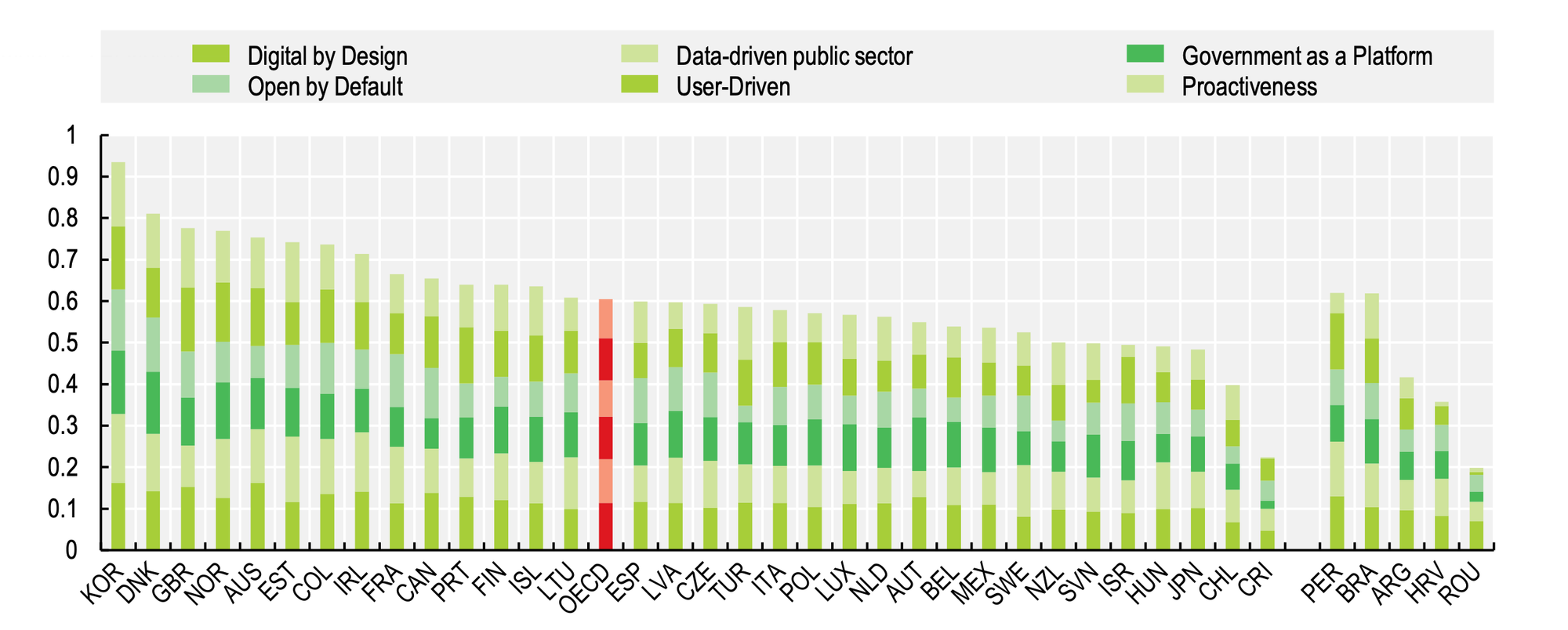
Conversations with Anne White really provoked alarm with me as I understood this data more and more. Within the UN's e-Government Development Index, Canada's absolute scores have remained virtually static since the early 2000s and, on a relative basis, are declining at a precipitous rate.
And while we have plenty of company in our mediocre performance, contrast the difference with global leader Denmark:
In a 2022 EU survey, 87% of Denmark's services were accessible online, 19 points above the EU average of 68%. Danish citizens reported a staggering 91% satisfaction rate with their experience on government digital services. To some governments, such numbers seem unimaginable.
I could spend a few more thousand words writing about health, but to quickly use it as a case study here:
Despite spending more than ever on healthcare, both per person and in absolute terms, the "social determinants of health" are increasingly dragging down other major wins, such as decreasing maternal mortality. Increases in self-reported ill-health in the European Union show a slight bias towards wealthier countries, while poorer countries sometimes seem to be getting better.
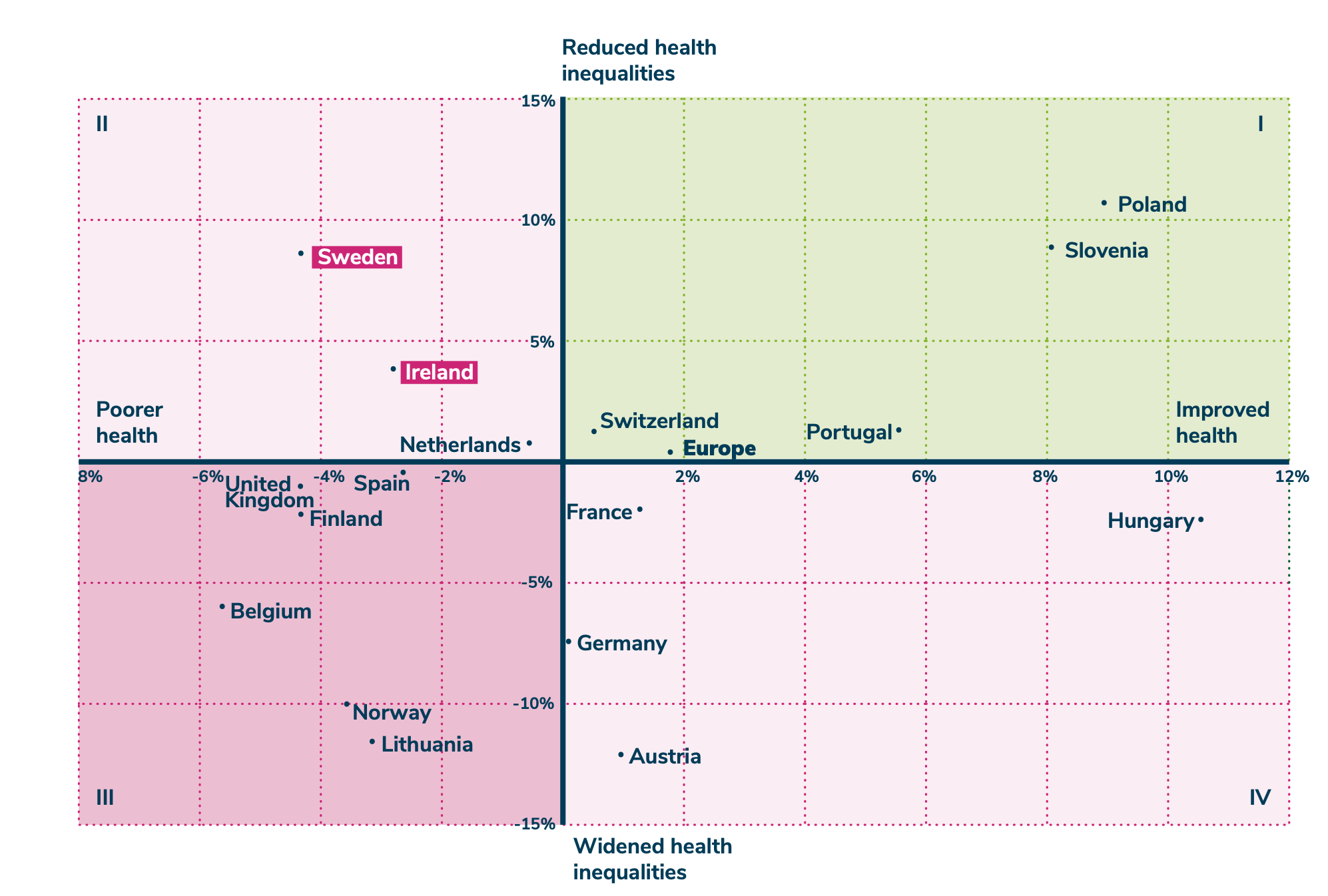
Overarchingly, this all correlates with a 10% overall decline in the satisfaction of citizens in wealthy countries with their healthcare between 2021 and 2023.

There are many different attempts to better understand (and rank) how capable governments are in this changing operating environment of (1) higher complexity and (2) greater expectations. From static measures and institutional checklists, like the Blavatnik Index of Public Administration, to more dynamic views, like the Institute for Innovation and Public Purpose's Public Sector Capabilities Index, we're trying to better grok the state of how we're actually performing, and what skillsets and perspectives we need in place to do better.
But what would we need to do to get to better outcomes?
Andrew Greenway and Tom Loosemore have some pretty good answers.
 The Radical How
In 2024, they released The Radical How, a literature review on state capacity and framework for public sector transformation. In it, they brush aside arcane debates about development theory and get into the brass tacks of delivering better services, drawing on insights from the design and tech worlds, while also harkening back to prior periods of social reform like the Beveridge Report.
As they argue in their introduction:
There’s a different approach to public service organisation, one based on multidisciplinary teams, starting with citizen needs, and scaling iteratively by testing assumptions.
Echoing American-Italian economist Marianna Mazucatto, they argue for shifting "government from an organisation of programmes and projects, to one of missions and services," where better outcomes can be delivered more quickly and affordably.
In their line of critique is the "waterfall" method of building projects and programs.
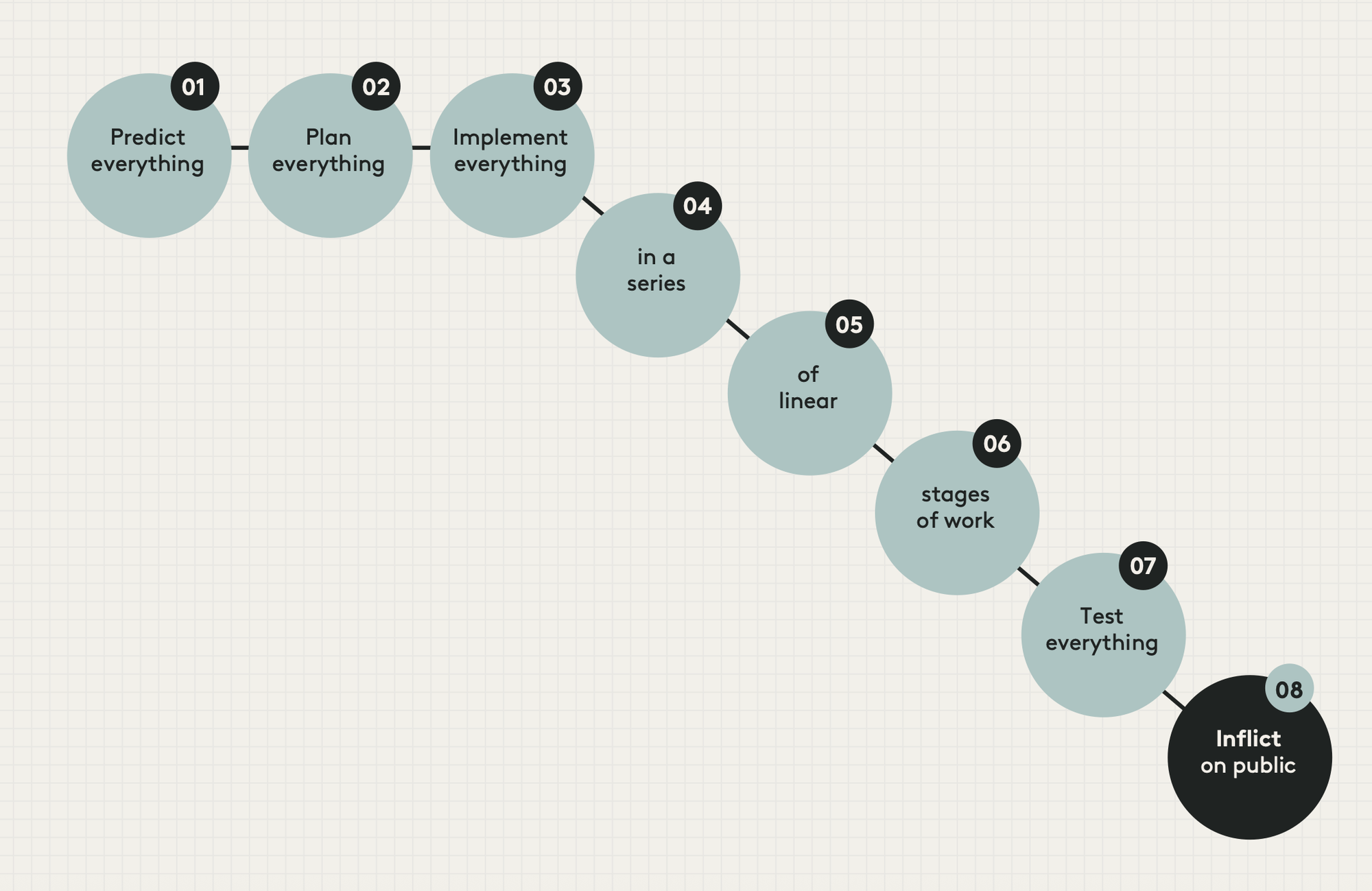
Instead, we need to "adopt an approach that deliberately and specifically acknowledges complexity and uncertainty, and mitigates for both." [original emphasis].
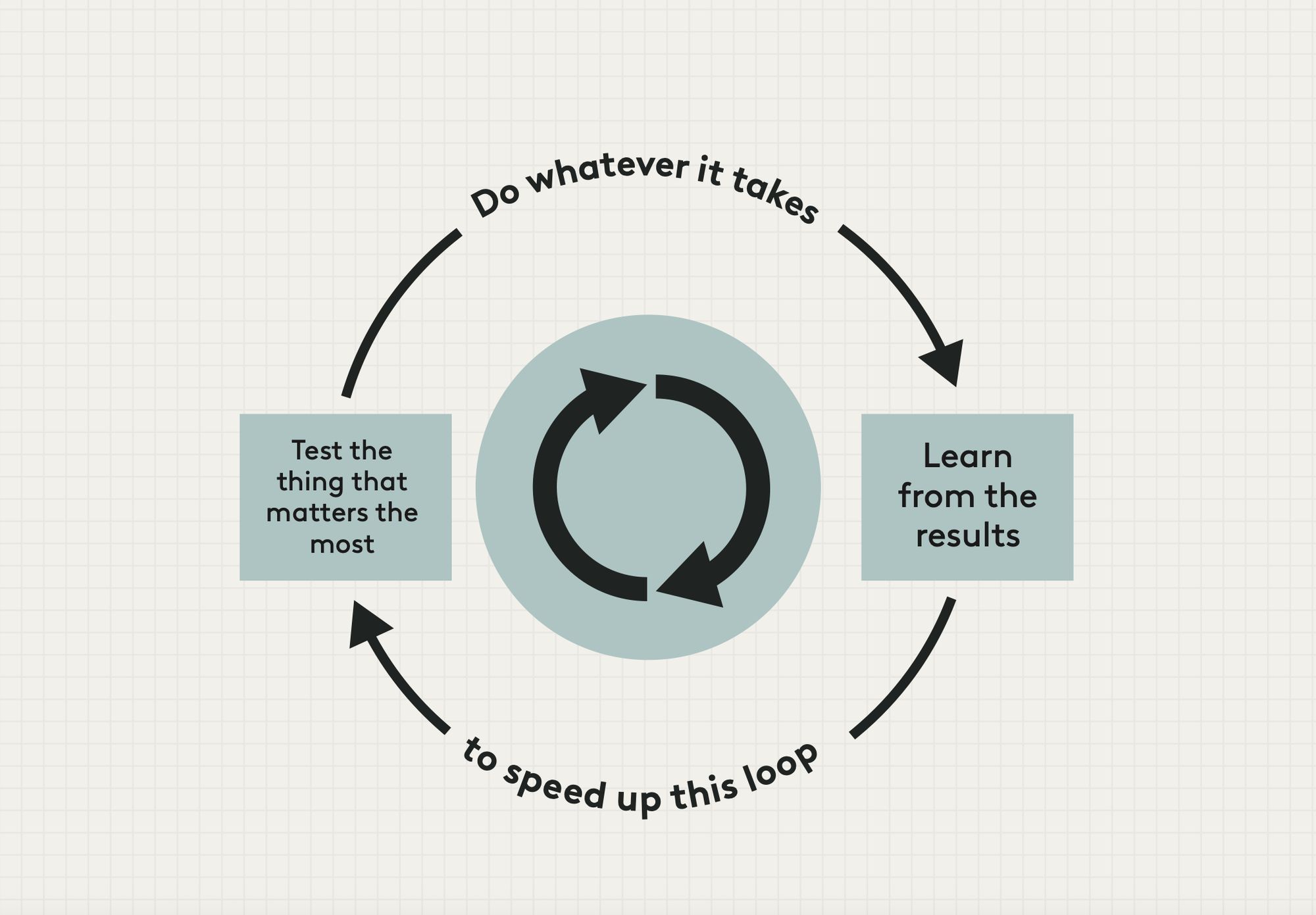
The simplicity of their recommendations is reflective of the substance of what they're saying: don't get distracted, stay focused on doing what matters.
They roll this up into ten principles for anyone looking to get to meaningful outcomes in government with complex, dynamic problems.
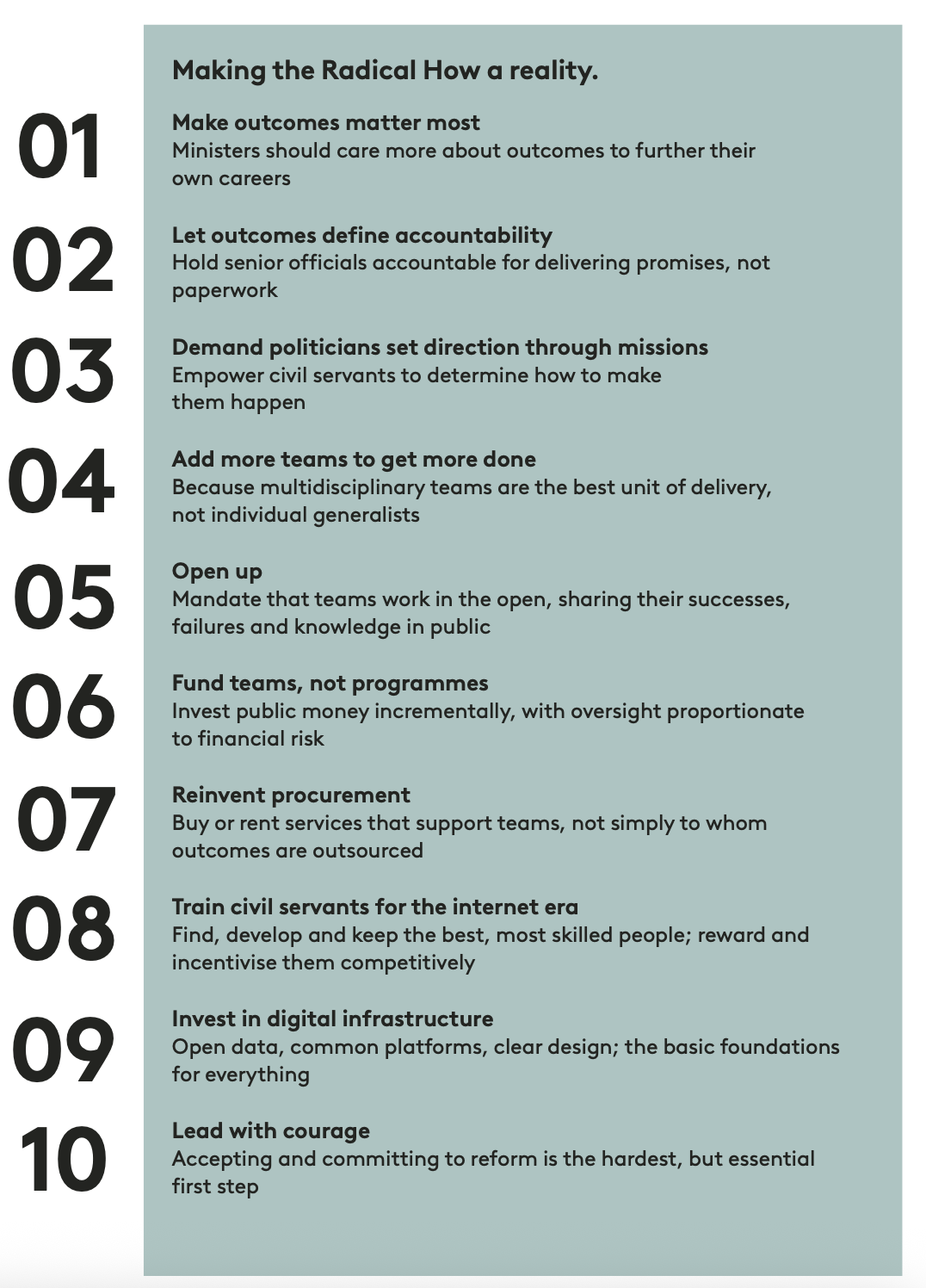
As the alarm sounds around the wealthy world, there are increasing numbers of variations on these principles. Many of them are rooted in a particular frustration around governments' inability to deliver affordable housing, but also the creakiness of social services, especially, again, healthcare.
When Greenway collaborated with Jennifer Pahlka at the Niskanen Centre later that year, the recommendations were translated into an American context with more outright scepticism of government than the UK, but the gist is still there. Similarly for Australia.
One of the interesting things that I have noticed in flirting with French concepts related to state capacity ("État fort" and "État stratège") is the focus on long-term thinking. In 2025, the French Conseil d'Etat presented its major annual study on "Incorporating the long term into public action." The report is part of a massive-multi-year process studying the performance of the French state, and focuses on 20 recommendations clustered around three "decisive conditions." The conditions are:
This is all to say that that while they are not one-for-one with the Anglophone works, there is a common thread across reform efforts in wealthy democracies: don't get lost in the details and move more quickly.
Although the language and imagery of the "radical how" is clean and contemporary, I think it hides some of the fundamental, even existentially difficult nature of what they're suggesting. Jennifer Pahlka provides a perfect microcosm of both the problem and the solution:
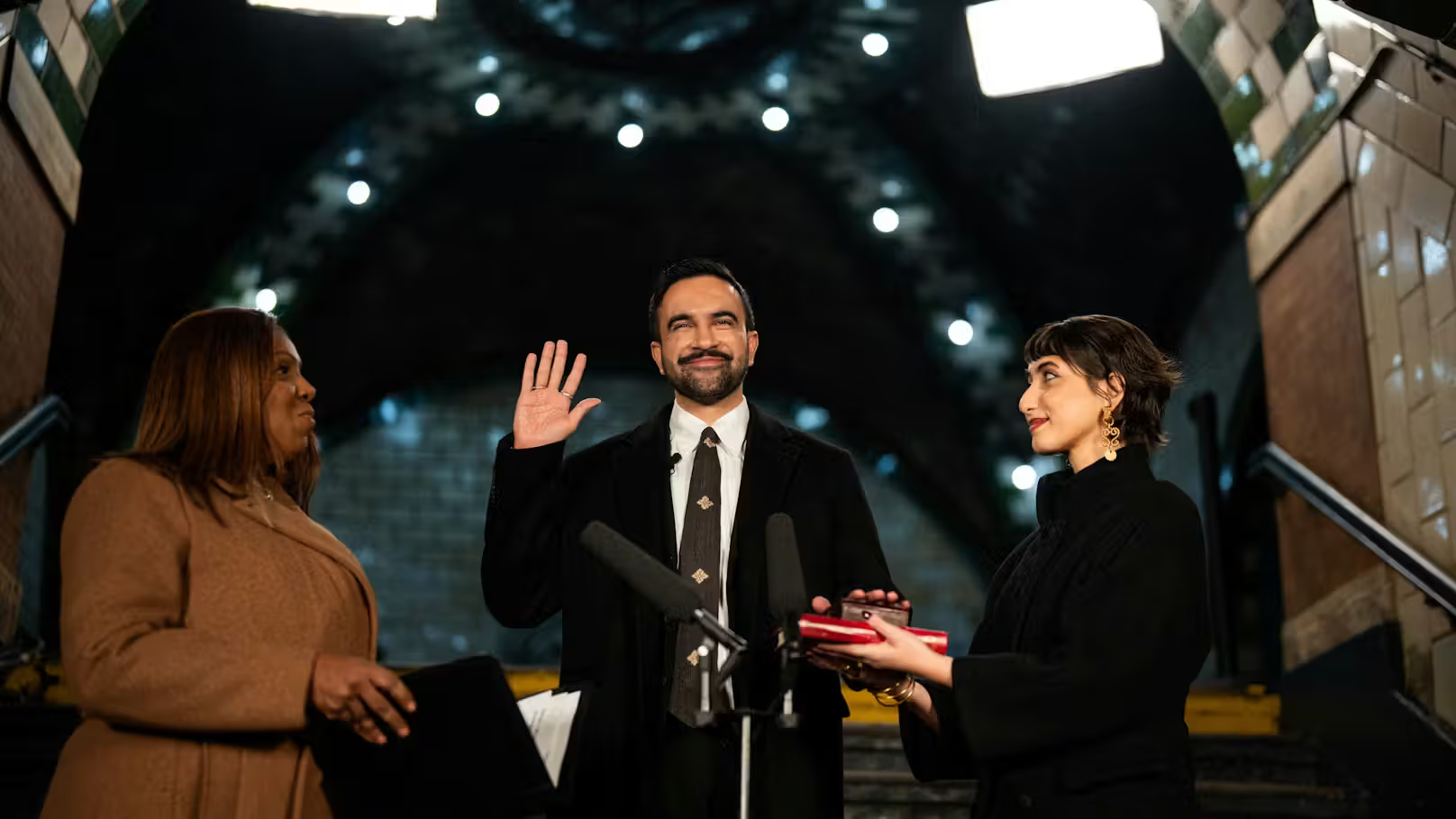
For New York Mayor Zohran Mamdani to successfully realize his ambitions, she argues, he will have to face the generations-old problem of the New York City hiring processes. This is brutal because:
In New York, a hiring manager can’t just pick the closest job title and description and hire someone using it. And an applicant can’t just apply for an open job that interests them. A central hiring authority periodically conducts exams for some of these 3000 different positions, and applicants interested in that position must take the exam when it is offered if they want to be eligible.
She explains that if you miraculously know you want to be, for example, an "Administrative Business Promotions Coordinator," you need to watch out for an exam that is administered for that role (which will not be obviously advertised) and then spend $85 to take the test. If, however, your life's ambition is to work in public health, or for a specific agency and you don't understand this arcane testing system, you're sh*t out of luck.
Every individual instance of this may sound merely frustrating, but when you add this up to the scale of thousands upon thousands of roles, suddenly your ability to staff the initiatives you care about could be existentially impeded.
The answer here is not to be found in any heart-lifting policy platform or declaration, but rather in the unloved, seemingly impossible task of reforming the New York civil service system. (which Rebecca Heywood goes into much greater detail about).
Speaking from experience, this is pretty much the diametrical opposite of what anyone wanting to make large-scale change in the world wants to think about.
From what I have seen, this is a problem with two parts:
Firstly, as Greenway, Loosemore, Pahlka, and many others all know, those of us trained in policy, business, finance, and other elite-coded professions don't often like to think about operations. We're not trained in them, for one, and, per the "procedure fetish," have had to become experts in navigating bureaucratic processes. We'll worry about implementing something if we can figure out a way to even get an idea through the sausage-making process – something we probably have grown to doubt more and more is even possible.
We have become at once cynical and high-minded. To borrow from Richard Feynman: we have become too Greek – conceptual, axiomatic – in how we look at solving problems, and need some gritty, Babylonian "but does it work?"-style attitudes in our governmental processes.
The second aspect of the problem, however, is even larger than that.
It's a problem that Canadian philosopher Joseph Heath lays out brilliantly (as quoted by Pahlka) when talking about progressive reactions to Ezra Klein and the "abundance" discourse:
[North American] progressives want a Swedish-style welfare state without doing any of the hard work that is involved in creating a state apparatus capable of delivering a Swedish welfare state.
He goes on to name discuss Elizabeth Warren's proposal for a wealth tax:
This is a typical “all-pudding no-meat” position. There are various objections to wealth taxes, but one of the most significant is that imposing them requires the creation of an entirely new administrative system, since taxpayers are currently only required to report their income to the government, not their wealth. You can’t just add a few extra lines to the income tax form. The problem is that in 2020, when Warren was campaigning on this, the U.S. federal government barely had the capacity to collect an income tax.
Another way to say this is that while we have many policymakers who are divorced from implementation, we have a broader societal distaste affectually for implementation and operations, especially if it involves mucking about with existing systems. I have lost track of the number of times in the policymaking process where a civil servant, politician, or even a member of the public has said something like "let's not worry about fixing our existing system for the moment, the most important thing is that we do something right now."
The reasons are as simple as they are depressing: vested interests are too entrenched; the systems too arcane, and we've forgotten how they got that way. Perhaps most insidious is the idea that to inspect and work on existing systems is to abandon any idea of transformative change. Reform is equated with, at best, moving too slowly, and at worst, with being a normie shill for the status quo.
But if everyone thinks and acts the same way, we end up with byzantine mazes of more and more new and alternative processes and new institutions. The layers of bureaucracy pile up in a vast delta of failed ambition, smothering a new world before it can even be born.
So, if I may submit an additional consideration to the state capacity conversation, it's this:
The more difficult and boring a problem is, the more likely it is the thing that is holding back truly transformative change.
A few examples to consider:
Delivering any one (or, daresay, all) of these things is a significant undertaking. It involves navigating myriad bureaucratic processes, interest groups (H&R Block hates tax reform, FYI), and the hard, unloved work of implementing solutions we don't know will necessarily work the first time 'round. But, if our existing evidence is to be believed, each would meaningfully, and in some cases dramatically, better people's lives.
This work is hard, boring, and, almost entirely because of these two preceding facts, it is deeply worthwhile.

We know that the capacities of states to respond to a world that is more dynamic and complex are strained, at the same time as citizens (rightly) expect more from their governments, both in the variety and quality of the services they deliver.
Understanding how and why our states' capacities have been reduced, and the things we can do to enhance those capacities, is only one part of the problem, however.
The larger issue, though still inextricable from the question of capacity, is what we want our future to look like.
There's a profound sense of malaise in many liberal democratic societies that we've bottomed out and our leaders have lost sight of anything outside of the next financial quarter or by-election.
And although many progressives are deeply critical of the outcomes of today's society, we're still wedded to many, many components of it: protection for minority rights, resource redistribution and public welfare, individual bodily autonomy, cultural diversity, to name just a few. Even some of the most radical propositions to reform our society from the progressive side usually include underlying assumptions about continued publicly operated transit, or legally enshrined protection for women's reproductive rights, for example.
Same-same, but different, detractors argue.
Swedish pop philosopher Mia Mulder recently made the point that this is an advantage to anti-democratic forces in society. They get to say tear the whole system down and mean it. Mealy-mouthed "but on the other hand" arguments from people like me (5,000 words in) tend not to be as motivating as full-throated critiques that a system is broken and needs to be torn down whole-sale.
I think the question not progressives, but anyone committed to democracy need to be asking is: how we make a case for the society we want to live in?
Anathema though it is to any progressives, Ezra Klein's vision of a "liberalism that builds," is probably not that far off what most people actually want – strong safety nets and high individual autonomy, in a generally prosperous and connected society – but naming and framing that are a much more complex task.
It's not an end point for this work, but I always come back to Amartya Sen: we want to live in a world that doesn't just allow for, but enables human flourishing. It's not perfect, but it's a start.
Strategist, writer, and researcher.
No spam. Unsubscribe anytime.